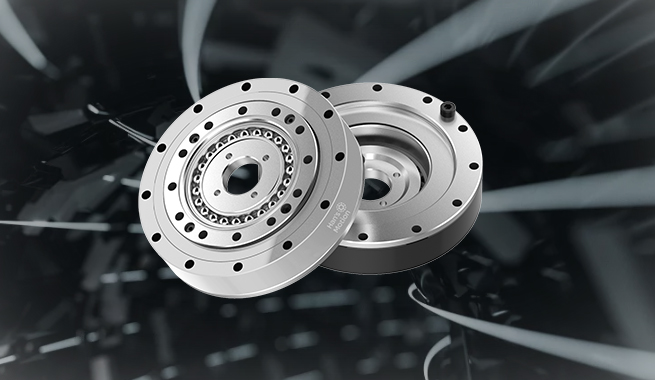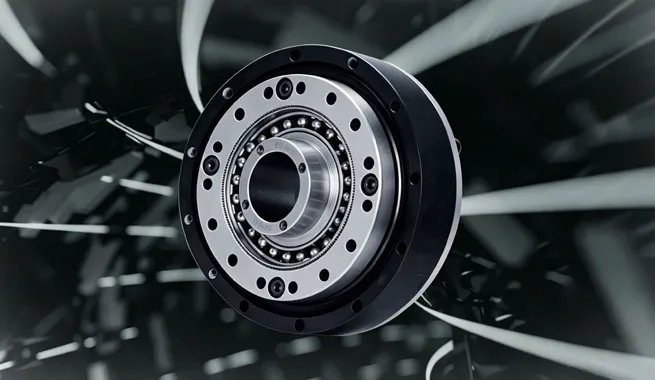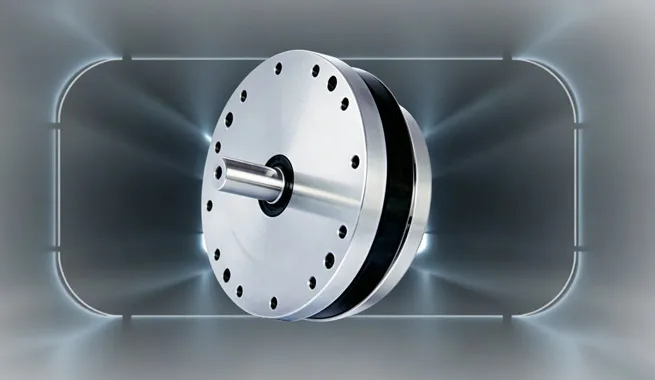
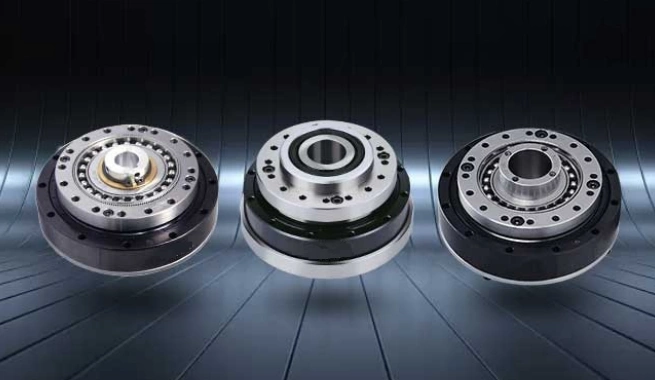
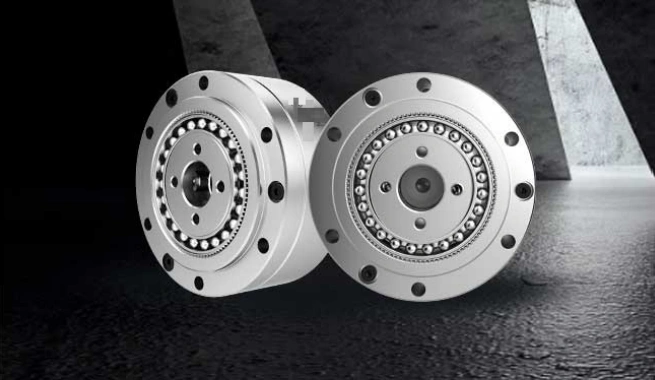
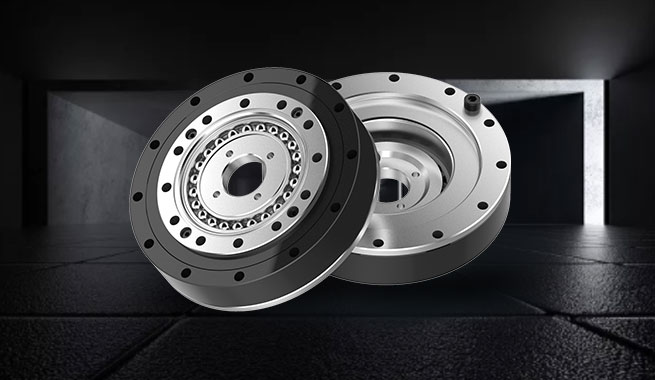
In modern industrial and high-end equipment manufacturing, precision drive technology has always been a core factor determining the performance of mechanical systems. As one of the major inventions in the field of mechanical engineering in the 20th century, the harmonic reduction gear has demonstrated irreplaceable value in high-end fields such as robot joints, aerospace equipment, and precision instruments, owing to its unique transmission principles and exceptional performance metrics.
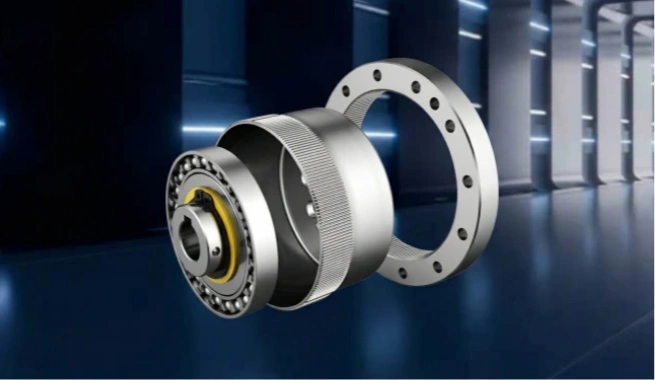
The core breakthrough of the harmonic reduction gear lies in its revolution of the traditional rigid meshing mode of gear transmissions. It innovatively uses the elastic deformation of flexible components to achieve power transmission. Its basic structure consists of three core components: the wave generator, the flexible gear (flexible wheel), and the rigid gear (rigid wheel). The periodic deformation wave generated by the wave generator creates dynamic meshing between the flexible gear and the rigid gear, thereby converting high-speed input into low-speed, high-torque output.
During the transmission process, the wave generator, acting as the active element, typically consists of an elliptical cam combined with a flexible bearing. When the input shaft drives the wave generator to rotate, the elliptical deformation wave of the flexible bearing is transmitted to the flexible wheel at a frequency of hundreds of times per second. As the core elastic component of the transmission system, the flexible wheel's gear ring undergoes periodic elastic deformation under the action of the wave generator and forms a conjugate gear mesh with the internal gear ring of the rigid wheel. Since the flexible wheel typically has 2 fewer teeth than the rigid wheel, a phase difference of two teeth occurs every full rotation, resulting in a reduction ratio as high as 1:50 to 1:320.
This transmission method based on elastic mechanics offers several technical advantages that traditional gearboxes can hardly achieve. First, its compact structure is a revolutionary breakthrough, with the same power density but only one-third the size of planetary gear reducers, making it especially suitable for space-constrained precision equipment. Second, the meshing gear count can reach over 30% of the total number of teeth, far surpassing the 1-2 teeth meshing state of ordinary gears, significantly enhancing torque-bearing capacity. Most importantly, the self-compensating feature of elastic deformation eliminates the backlash problem typical of traditional gears, allowing transmission precision to reach arcsecond level, which is crucial for high-precision servo systems.
The performance limits of the harmonic reduction gear are fundamentally determined by advances in materials science and precision manufacturing technology. The flexible wheel, as the core component that endures periodic alternating stresses, needs to possess high strength, high fatigue limits, and excellent elastic modulus. Early products using common alloy steel often had a lifespan of less than 10,000 hours. With the development of material metallurgy technology, the use of vacuum degassed SCM415 chromium-molybdenum steel combined with carburizing and quenching processes has enabled surface hardness to reach HRC58-62 while maintaining HRC30-35 toughness in the core. This advancement successfully extends the fatigue lifespan to over 20,000 hours.
In terms of manufacturing processes, the machining of the flexible wheel's thin-walled gear ring is a pinnacle challenge in precision manufacturing. The use of CNC hobbing technology, in which the precise motion relationship between the grinding wheel and the workpiece is carefully controlled, allows the processing of an involute gear profile with a modulus of 0.2 and JIS0 grade precision on a flexible wheel with a wall thickness of just 0.2mm. This process requires the machine tool spindle runout to be controlled within 1μm, and the ambient temperature fluctuation should not exceed ±0.5°C, showcasing the highest level of modern ultraprecision machining technology.
The manufacturing of the wave generator highlights breakthroughs in bearing technology. By employing a multi-row crossed roller bearing design and using special heat treatment processes to reduce the residual austenite content on the roller surface to below 5%, the bearing’s elastic deformation ability is ensured, while micro-wear under cyclic stress is reduced by 70%. Coupled with a nano-scale molybdenum disulfide solid lubrication coating, the bearing can maintain over 10^8 motion cycles even without lubrication.
The unique performance characteristics of the harmonic reduction gear have enabled it to establish technical barriers in multiple high-end fields. In the industrial robot field, its high rigidity and zero backlash properties ensure that the end repeatability accuracy of six-axis collaborative robots can reach ±0.02mm. For example, the FANUC R-2000iC series robot, through the combination of a harmonic reduction gear and direct-drive motors, achieves a cycle time of 0.1 seconds and millimeter-level precision under a 5kg load.
In the aerospace sector, the harmonic reduction gear's lightweight advantages have been fully utilized. The mechanical arm developed by NASA for the Mars rover uses a titanium alloy flexible wheel reducer, maintaining a transmission precision of 0.5 arc minutes under extreme temperature differences of -120°C to +80°C, while reducing the overall weight by 42% compared to traditional solutions. This extreme environment resistance makes it a standard component in key systems such as satellite antenna deployment mechanisms and space station robotic arms.
In the medical equipment field, the harmonic drive technologies' oil-free characteristic has proven beneficial. The wrist joints of the Da Vinci surgical robot employ fully sealed harmonic transmission technology, achieving 540° of freedom of movement while completely eliminating the risk of lubricant contamination in the surgical area. Statistics show that minimally invasive surgical instruments using harmonic drive technologies have reduced failure rates by 87% compared to traditional worm gear mechanisms.
Contact us today to discuss your project requirements and find the perfect harmonic drive solutions.
Contact Us Now
Hi, I am Sophie from Shenzhen PICEA Motion Technology Co, Ltd. I have been working in overseas business trade for more than 5 years. PICEA Motion is a professional manufacturer of precision harmonic gears. Our company integrates R&D, production, sales, and after-sales services.