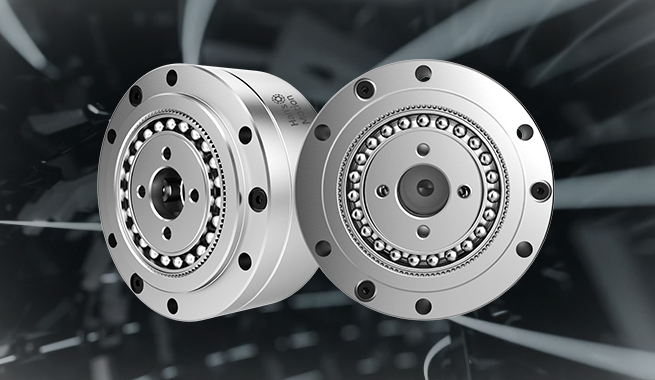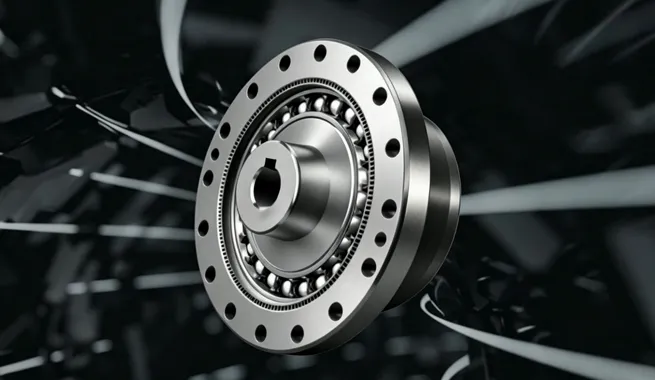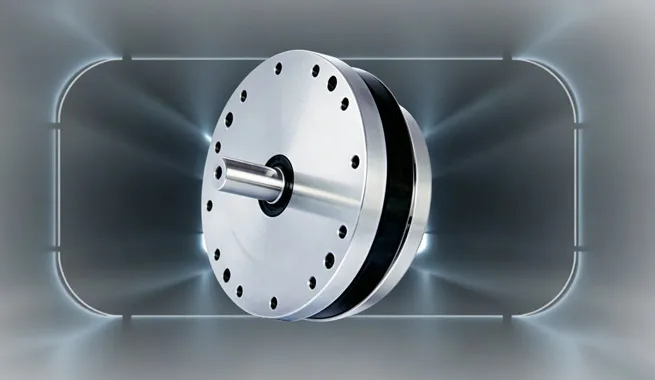
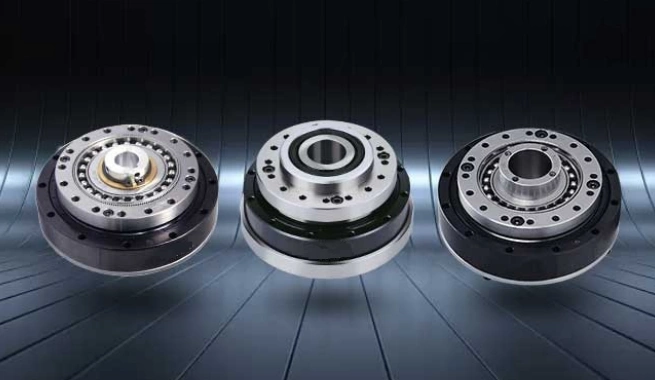
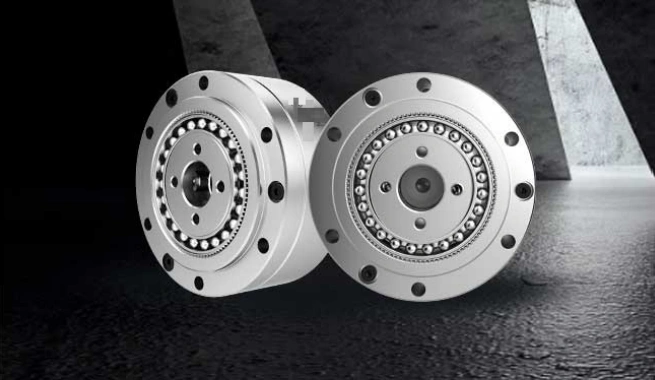
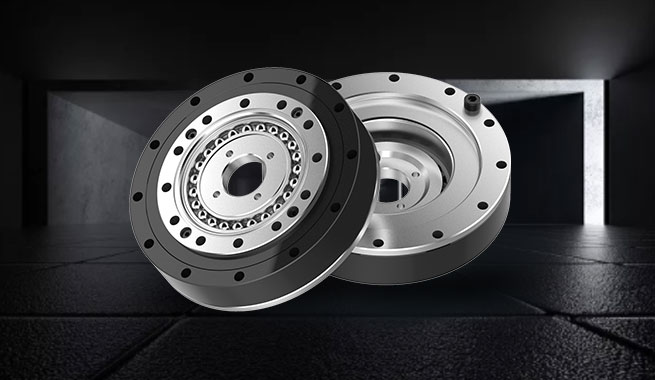
In the rotating joints of Tesla's Optimus, 14 harmonic reduction gears work in precision cooperation; in the agile wrists of UBTECH's Walker X, harmonic transmission error is controlled within 0.1 arcminutes; and even in the household service robot Unitree G1 by Yushu Technology, the "flexible" movements of each joint rely on the support of the harmonic reduction gear. This compact precision component, with a diameter of less than 10 cm, is quietly becoming the "soul" of humanoid robots' joints.
Working Principle: "Wave-like" Deformation of the Flexible Wheel
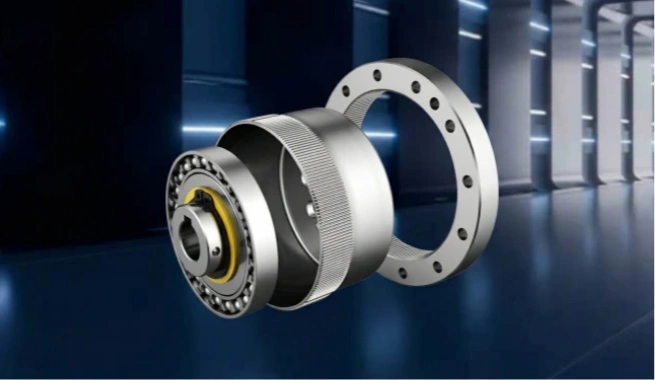
The core of the harmonic reduction gear lies in the elastic deformation of the flexible wheel. Its structure consists of a wave generator, a flexible wheel, and a rigid wheel: when the wave generator rotates, it forces the flexible wheel to produce periodic elastic deformation, which engages with the rigid wheel's teeth, converting high-speed input into low-speed, high-torque output. This design allows the single-stage transmission ratio to reach 30:1 to 320:1, far surpassing the planetary reducer's typical range of 3:1 to 10:1.
Performance Advantages: Balancing Lightweight and High Precision
Size and Weight: The harmonic reduction gear is only 1/3 the volume of a planetary reducer with the same torque, and 50% lighter. For instance, after adopting the harmonic reduction gear in the shoulder joint of Tesla Optimus, the weight of a single joint module dropped to 1.2 kg, while the traditional RV solution required 2.5 kg.
Transmission Precision: The backlash is nearly zero (<1 arcminute), better than the 3-5 arcminutes found in RV reducers. In UBTECH's Walker X gripping test, the harmonic reduction gear-controlled mechanical hand could stably grip a 0.1mm thick sheet of paper.
Industrial Applications: The Dual Challenge of High Load and High Precision
In the automotive manufacturing sector, KUKA's robotic arm wrist joints need to endure hundreds of repetitive actions per minute. Harmonic reduction gear in this application can last over 10,000 hours, with a failure rate below 0.01%. In the semiconductor industry, harmonic reduction gear, in combination with linear motors, enables nanometer-level positioning, facilitating precise movement of photolithography machine wafer stages.
Case Study: Midea Group's industrial humanoid robot uses a harmonic reduction gear and frameless motor integration module in its wrist joint, achieving an assembly accuracy of ±0.02mm and improving efficiency by three times over manual labor.
Home Applications: The Ultimate Demands for Silence and Compactness
Household service robots are highly sensitive to noise. Harmonic reduction gear, through flexible transmission, can keep operational noise below 45 decibels (equivalent to indoor conversation levels), while traditional planetary reducers typically exceed 60 decibels. The knee joint module of Yushu Unitree G1 employs a self-developed harmonic solution, delivering near-silent operation while delivering a joint thickness of only 5 cm when delivering a water cup.
Weight Reduction Race: Carbon Fiber and Topology Optimization
Tesla Optimus Gen3 plans to reduce the weight of its harmonic reduction gear by another 20%, using carbon fiber-reinforced composite materials for the flexible wheel. Domestic company Fengli Intelligent is using topology optimization to reduce the number of teeth on the rigid wheel from 200 to 180, achieving a 15% weight reduction while maintaining strength.
Intelligent Integration: From "Transmission Component" to "Sensing Unit"
Kodali is developing a harmonic module integrated with a torque sensor, which can provide real-time feedback on the joint's force status. Coupled with AI algorithms, robots can dynamically adjust their gripping force—outputting 0.1N·m of torque when handling eggs, and instantly increasing to 10N·m when moving heavy objects.
From factory robotic arms to household assistants, the harmonic reduction gear, with its "combination of rigidity and flexibility" is the key to humanoid robots' ability to bridge the gap between industrial and home environments. As domestic companies break through the triple barriers of materials, processes, and intelligence, this "joint revolution" will not only reshape the robotics industry but also bring "robots into homes" from the realm of science fiction into reality.
Contact us today to discuss your project requirements and find the perfect harmonic drive solutions.
Contact Us Now
Hi, I am Sophie from Shenzhen PICEA Motion Technology Co, Ltd. I have been working in overseas business trade for more than 5 years. PICEA Motion is a professional manufacturer of precision harmonic gears. Our company integrates R&D, production, sales, and after-sales services.