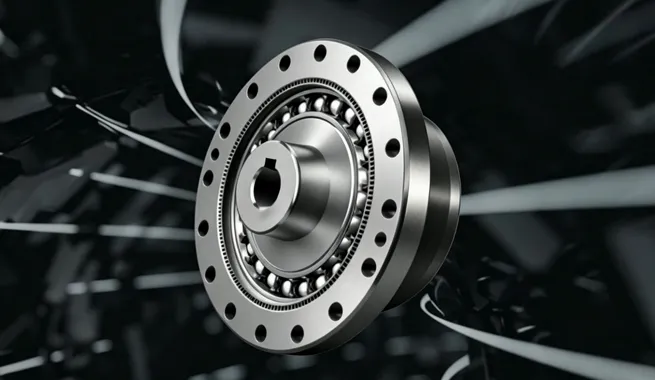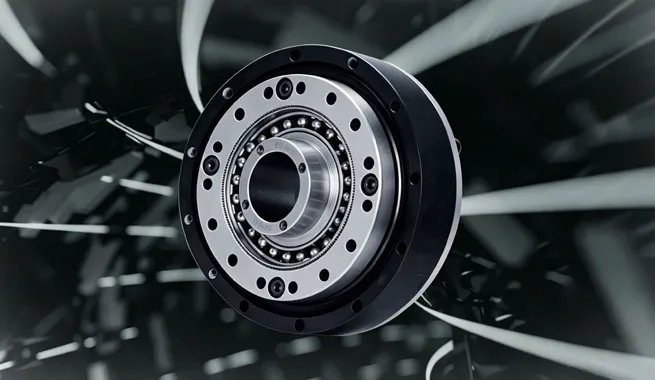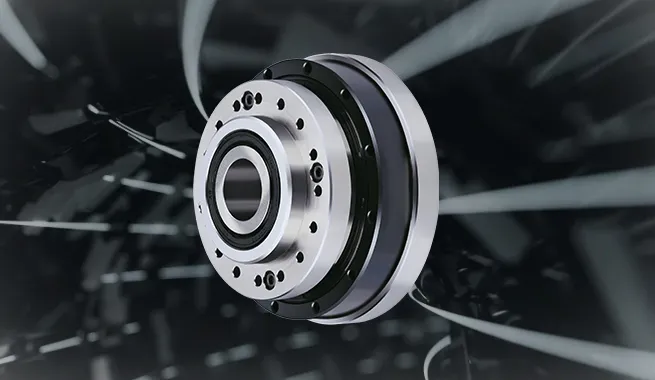
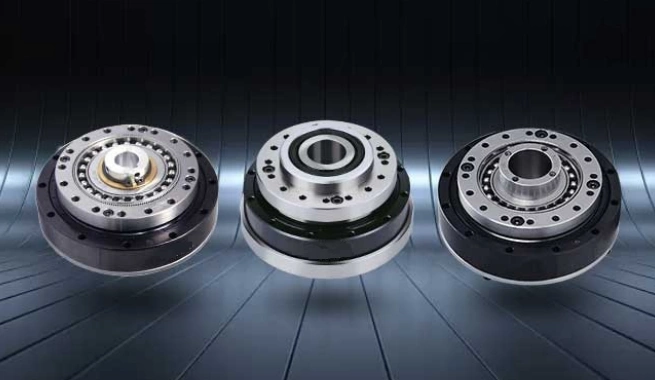
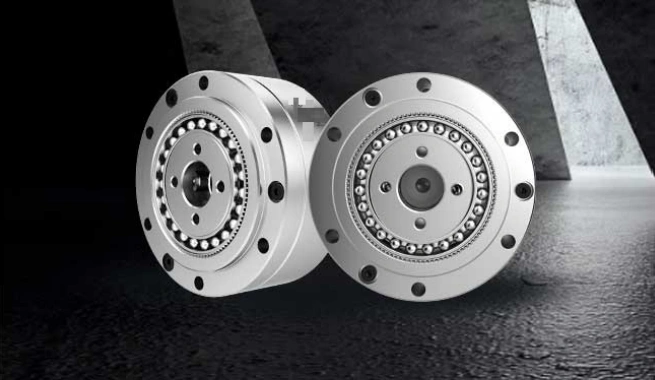
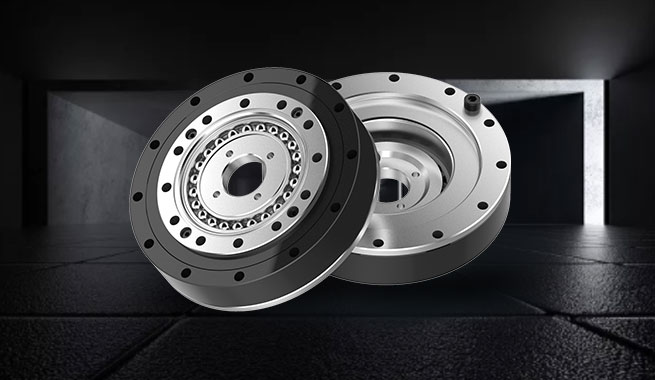
The mechanical arm of the humanoid robot Pepper completes a 180-degree rotation in just 0.3 seconds, with fingertip precision reaching an astonishing 0.02mm! This stunning Flamenco dance performance at the 2024 Tokyo Robotics Exhibition would not have been possible without the critical support of the harmonic reduction gear.
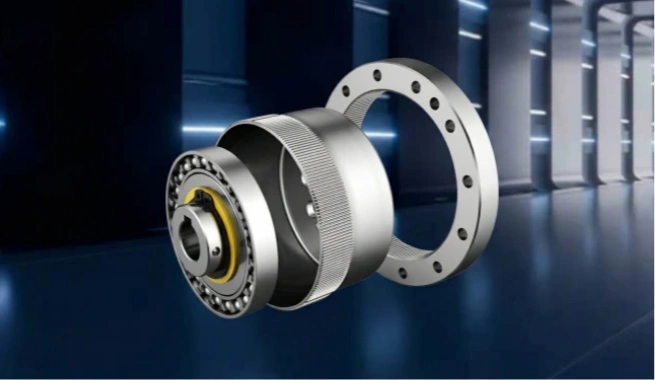
Traditional gear transmission relies on rigid gear teeth meshing to transmit power, while the harmonic reduction gear uses a completely new principle of flexible deformation. The core of the harmonic reduction gear consists of three components: the harmonic drive wave generator, the flexible wheel, and the rigid wheel. The wave generator drives the flexible wheel to produce periodic elastic deformation, which, in turn, engages with the fixed rigid wheel to create a gear difference transmission. This enables a transmission ratio of 30 to 320, which is more than 40% higher than the RV reduction gear. Testing by the Fraunhofer Institute in Germany shows that, under a 1000N·m load, the harmonic reduction gear's backlash error is only 0.5 arcminutes, a reduction of 80% compared to traditional planetary gears. This is similar to a ballet dancer using the elasticity of their tendons to achieve precise movements. The harmonic reduction gear uses flexible deformation to accomplish high-difficulty tasks in the transmission field.
In the medical field, the Da Vinci Xi system uses harmonic reduction gear to achieve a positioning accuracy of 0.005mm. This system, combined with tremor filtering algorithms, can attenuate a surgeon's hand tremors of 5mm down to below 0.5mm, enabling the fine operations of needle threading under a microscope. In industrial applications, the KUKA KR 10 R1100 six-axis robot, equipped with a harmonic reduction gear, achieves a repeatability accuracy of ±0.03mm, improving precision by 40%. ABB's IRB 1200 series incorporates dual-stage harmonic transmission, boosting the end-effector's dynamic response frequency to 80Hz, providing the robot with "high-speed shutter" response capabilities.
In other emerging fields, Boston Dynamics' Handle robot uses a harmonic reduction gear to achieve a 2.4-meter jump height and a running speed of 40km/h. Tesla's Optimus Gen-3 integrates miniature harmonic transmissions in the finger joints, supporting fine control with 32 degrees of freedom.
From Pepper's Flamenco dance to the Da Vinci surgical robot's minimally invasive procedures, the harmonic reduction gear provides precision control smaller than a human hair's diameter, transforming sci-fi movie dreams into reality. It is not only the precise joint mechanism of robots but also the technological extension of humanity's ability to surpass its own limits. In the future, as materials science, precision manufacturing, and artificial intelligence continue to merge, harmonic transmission technology will push the boundaries of traditional engineering, supporting robots' motion capabilities and precision beyond human capabilities.
Contact us today to discuss your project requirements and find the perfect harmonic drive solutions.
Contact Us Now
Hi, I am Sophie from Shenzhen PICEA Motion Technology Co, Ltd. I have been working in overseas business trade for more than 5 years. PICEA Motion is a professional manufacturer of precision harmonic gears. Our company integrates R&D, production, sales, and after-sales services.