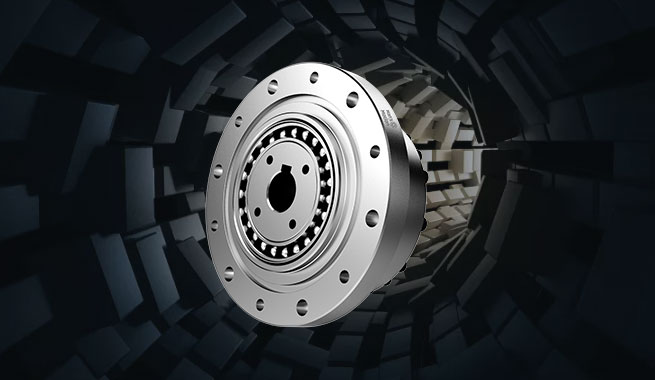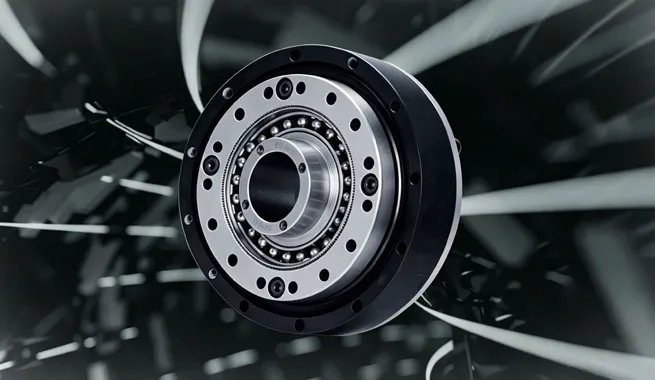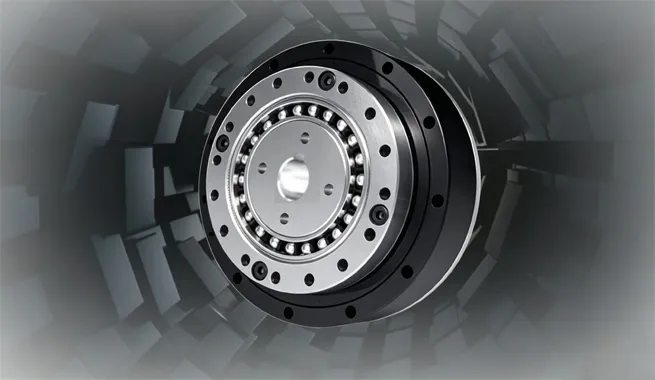
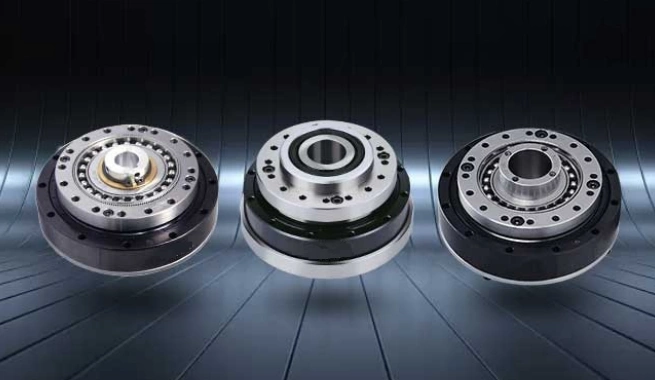
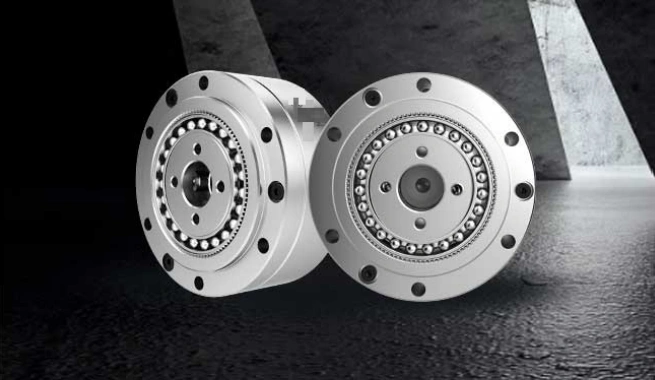
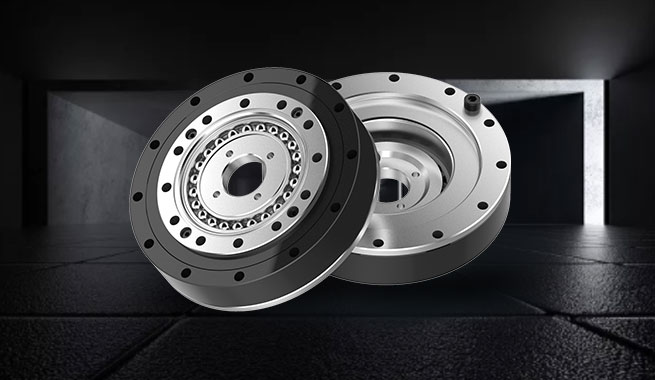
Imagine a seemingly ordinary metal box that can enable an industrial robot's arm to perform millimeter-level precise grabs and even carry out flawless equipment maintenance in space. This is the magic of the harmonic reduction gear.
As the core component of modern industrial precision transmission, its principle is as ingenious as "Transformers" — achieving high-precision, large-speed ratio power transmission through the controllable elastic deformation of flexible gears.
Core Structure Analysis
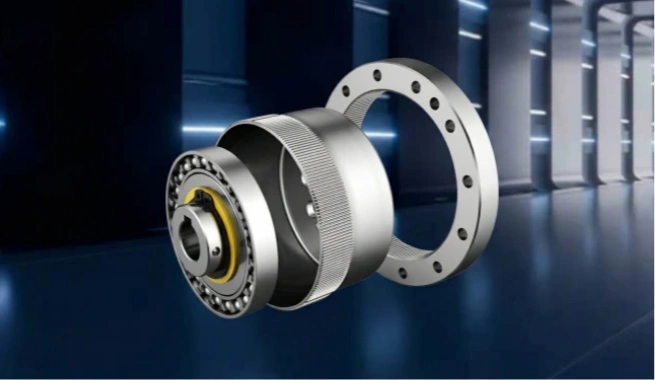
The harmonic reduction gear consists of three core components:
Rigid Gear: A fixed internal gear with two more teeth than the flexible gear (for example, 100 teeth for the flexible gear and 102 teeth for the rigid gear). The tooth shape is typically an involute or double-arc profile.
Flexible Gear: A thin-walled metal cup-shaped structure with teeth on the outer edge, capable of elastic deformation and able to withstand periodic shape changes.
Wave Generator: An elliptical or polygonal cam with flexible bearings that drive the flexible gear to deform periodically.
Why does the rigid gear need two more teeth than the flexible gear? The difference in the number of teeth achieves the reduction ratio. For example, with 100 teeth on the flexible gear and 102 teeth on the rigid gear, when the wave generator rotates one full turn, the flexible gear rotates back only one tooth, resulting in a reduction ratio of 50:1. Reduction Ratio Calculation Formula: Reduction Ratio = (Flexible Gear Teeth) / (Rigid Gear Teeth - Flexible Gear Teeth)
Working Principle
When the wave generator rotates, the flexible gear is forced to change from a circular to an elliptical shape. The teeth at both ends of the long axis engage completely with the rigid gear, while the teeth at both ends of the short axis disengage. As the wave generator continues to rotate, the engagement points between the flexible and rigid gears constantly change, forming "misaligned gear transmission" and ultimately achieving a reduction effect. This unique transmission method allows the harmonic reduction gear to achieve a single-stage reduction ratio of 1/30 to 1/320, while maintaining extremely high transmission accuracy (less than 1 arc minute of error).
Precision King: The transmission error can be as low as 0.1 arc minutes (1 arc minute = 1/60th of a degree), far surpassing traditional gears.
High Torque Density: For the same volume, the torque output is 2-3 times that of planetary gears.
Zero Backlash: There is no gap when the flexible and rigid gears engage, making it ideal for applications requiring reverse positioning (such as robot joints).
Compact Structure: The volume is 2/3 smaller than traditional reduction gears, and it is 50% lighter.
Self-Locking Feature: When the system stops, the load will not reverse, avoiding vibrations.
| Harmonic Reduction Gear | Traditional Reduction Gear |
|---|---|
| Transmission Ratio | Single-stage up to 1/30 to 1/320 |
| Precision | Repeated positioning accuracy ≤ 1 arc minute |
| Volume/Weight | Volume reduced by 2/3, weight reduced by 50% |
| Transmission Efficiency | 65%–96% |
| Backlash | Can achieve zero backlash |
| Impact Resistance | Excellent performance in medium to low load scenarios |
Flexible Gear Lifespan: Periodic deformation can lead to fatigue and fracture, requiring regular maintenance.
Heat Dissipation Challenges: The compact structure makes heat dissipation difficult, and high temperatures may affect precision.
Higher Cost: Due to the high precision required for manufacturing, before local production, the price of harmonic reduction gear is 2 times that of RV gears.
Industrial Robots: Joint drive for robotic arms (accounting for 30% of cost).
Medical Equipment: Precise positioning for minimally invasive surgical robots (such as the Da Vinci system).
Aerospace: Satellite antenna pointing systems, space robotic arms.
Semiconductor Manufacturing: Nanometer-level positioning for wafer photolithography machines.
Humanoid Robots: Finger joints, waist drive (more than 20 units used in a single machine).
The harmonic reduction gear, this seemingly insignificant "small box", carries the future of intelligent manufacturing. From industrial robots to space exploration, from medical surgeries to humanoid robots, its presence is everywhere. With continuous technological breakthroughs, we have every reason to believe that the harmonic reduction gear will write a new legend in the global precision transmission field. Let's look forward to the magnificent transformation of this "invisible champion"!
Contact us today to discuss your project requirements and find the perfect harmonic drive solutions.
Contact Us Now
Hi, I am Sophie from Shenzhen PICEA Motion Technology Co, Ltd. I have been working in overseas business trade for more than 5 years. PICEA Motion is a professional manufacturer of precision harmonic gears. Our company integrates R&D, production, sales, and after-sales services.