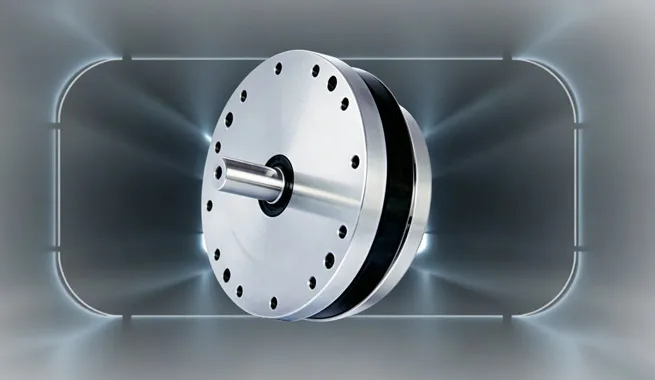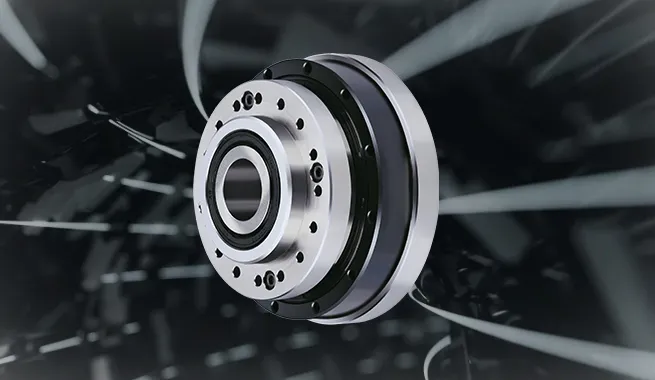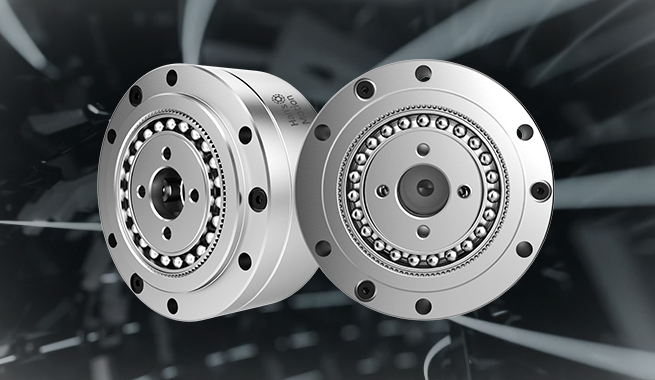
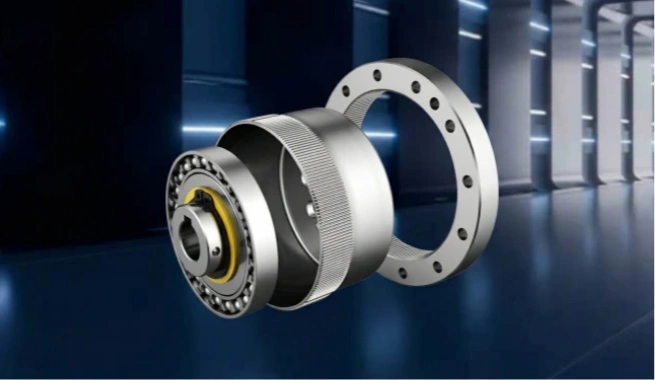
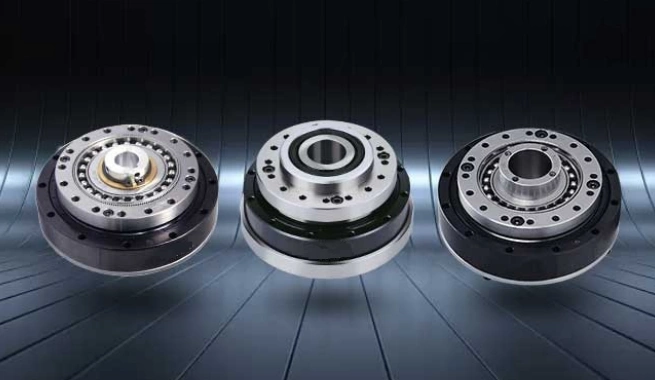
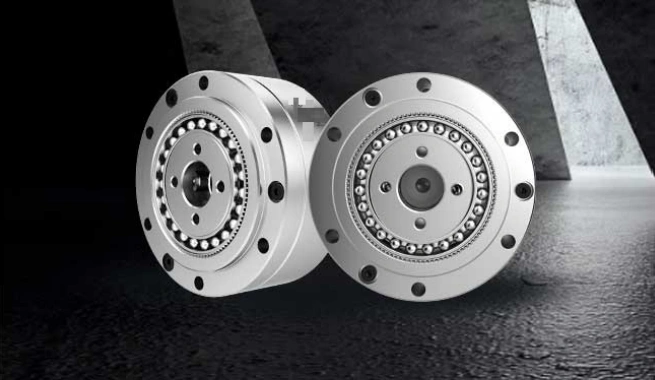
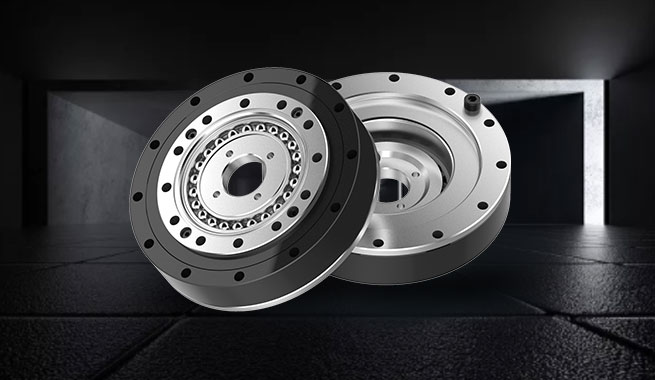
The harmonic reduction gear, as the "heart" component of robots, precision instruments, and high-end equipment, directly determines the motion accuracy, response speed, and reliability of the system. However, with the vast array of products available on the market, how can one choose the most suitable harmonic reduction gear based on key parameters? This article will delve into five core parameters—transmission ratio, precision, load capacity, efficiency, and lifespan—analyzing the impact of these parameters on performance and helping you make the right choice for optimal performance!
Transmission Ratio: The "Gear Shift Code" that Determines Output Torque and Speed
The transmission ratio is one of the core parameters of a harmonic reduction gear, representing the speed ratio between the input and output shafts. Its size directly impacts the system's power output characteristics:
High transmission ratio (typically ranging from 50:1 to 160:1): It significantly increases the output torque, making it ideal for applications requiring low speed and high torque, such as precise joint positioning in robots.
Low transmission ratio: Suitable for high-speed, light-load applications but with weaker torque output.
Actual Impact
Precision and Efficiency Trade-off: A large transmission ratio increases gear friction, reducing efficiency (about 5%-10% loss). Additionally, a very large transmission ratio can lead to an increase in the flexible gear's deformation, causing accumulated transmission errors to rise by 20%-30%.
Dynamic Response: A high transmission ratio can increase system inertia, affecting the robot's motion response speed.
Resonance Risk: High transmission ratio models have a lower critical speed, which may induce vibration during high-speed operation.
Transmission Precision: The Key to the Robot's "Flexibility and Agility"
Transmission precision is the maximum difference between the actual output angle and the theoretical angle after one rotation of the input shaft with no load. It is measured in arc minutes (1 arc minute = 1/60 degree). Transmission precision is the core competitive advantage of harmonic reduction gear, usually measured by backlash and repeatability:
Zero backlash design: Harmonic reduction gear achieves gapless meshing through the elastic deformation of the flexible gear, keeping backlash within 1 arc minute, far superior to traditional gear reduction units.
Repeatability: Can reach ±10 arc seconds, satisfying the needs of high-precision scenarios such as semiconductor equipment.
Key Impact Factors
Harmonic Generator Precision: The eccentricity error in the harmonic generator directly affects the uniformity of meshing between the flexible and rigid gears. The error must be controlled at the micron level.
Materials and Heat Treatment: Flexible gears made of high-performance alloy steel (e.g., 40CrNiMoA) and treated with nitriding reduce deformation-related precision loss.
Failure Case: If the flexible gear material fatigues and cracks, backlash will increase rapidly, leading to robot positioning drift, requiring regular checks.
Impact on Performance
Precision Positioning Core: Medical robots require precision of θ≤1 arc minute (e.g., Da Vinci surgical robots achieve 0.5 arc minute precision), while standard industrial settings can tolerate up to 3 arc minutes.
Backlash Correlation: Transmission precision includes gear meshing errors and flexible gear deformation errors, which are typically 1-2 arc minutes greater than backlash (backlash is the amount the output shaft can rotate in reverse with no load).
Load Capacity: The "Invisible Threshold" of Lifespan and Reliability
Load capacity includes both the rated torque and peak torque, which directly determines the harmonic reduction gear's applicable range:
Rated torque: Conventional harmonic reduction gear typically ranges from 10-50 Nm, suitable for light robots. Larger models can reach up to 200 Nm, but volume and cost significantly increase.
Overload Risk: Instantaneous overloads may lead to permanent deformation of the flexible gear, causing a decrease in precision.
Impact on Performance
Lifespan Core Indicator: Operating above the rated torque by 10% reduces the flexible gear's fatigue life by more than 40%.
Stiffness Correlation: For the same specification, models with higher rated torque have a 20%-30% increase in flexible gear wall thickness and a 35% improvement in torsional stiffness (e.g., the LCS-14-100 model has a rated torque of 7.4 Nm, while the LCS-17-100 is 23 Nm).
Enhancement Pathways
Structural Optimization: The dual harmonic generator design can disperse stress, improving load capacity by more than 30%.
Material Innovation: Carbon fiber composite flexible gears are under development, offering five times the strength of traditional steel, though at a higher cost.
Application Scenario Comparison
Collaborative Robots: Focus on lightweight design, choosing products with 20-30 Nm rated torque.
Heavy-duty Robotic Arms: Need to be paired with RV reducers, with the harmonic reduction gear used only at the end axis.
Transmission Efficiency: The "Invisible Killer" of Energy Consumption and Temperature Rise
Transmission efficiency reflects the level of energy loss, typically ranging from 65%-96%, influenced by the following factors:
Gear Surface Friction: Lack of proper lubrication may cause efficiency to drop below 70%, accelerating wear.
Temperature Sensitivity: Efficiency decreases by about 0.5% for every 10°C increase in temperature, requiring forced cooling in high-temperature environments.
Impact on Performance
Heat Control: For every 10% reduction in efficiency, the temperature rise increases by 8-10°C (if it exceeds 70°C, forced cooling is required).
Energy Consumption Costs: For equipment running continuously for 24 hours, choosing a model with η=90% reduces annual energy consumption by 3500 kWh (assuming a 50W input power).
Optimization Solutions
Lubricant Selection: Fully synthetic greases (such as Kluber ISOFLEX NBU 15) reduce friction and extend oil change intervals to 20,000 hours.
Heat Dissipation Design: Aluminum alloy casings dissipate heat 40% more efficiently than steel cases, but strength requirements must be balanced.
Light-load Scenario (<30% load factor): Choose a dual harmonic reduction gear (efficiency 90%+).
Heavy-load Scenario: Select a three-wave structure (efficiency 85%+ but with higher stiffness).
Lifespan and Reliability: The "Ultimate Challenge" of Cost Control
The lifespan of a harmonic reduction gear is usually measured by the cumulative operating hours until the precision degrades to twice its initial value under rated load. Mainstream products have lifespans of 8,000-12,000 hours, but actual lifespans are influenced by several factors:
Load Type: Frequent start/stop or shock loads can reduce lifespan by more than 50%.
Environmental Factors: Humidity >80% or dusty environments can accelerate bearing rusting and gear surface wear.
Key to Extending Lifespan
Preload Adjustment: Preloading the harmonic generator to eliminate installation gaps can reduce fatigue damage caused by vibrations.
Smart Monitoring: Integrating temperature and vibration sensors can enable fault warning systems.
With the growing demand for humanoid robots, high-end CNC machines, and other emerging fields, harmonic reduction gear is evolving toward higher precision, longer lifespan, and smart technology. When selecting a harmonic reduction gear, only by aligning with actual working conditions can every piece of equipment "perform precisely" and efficiently!