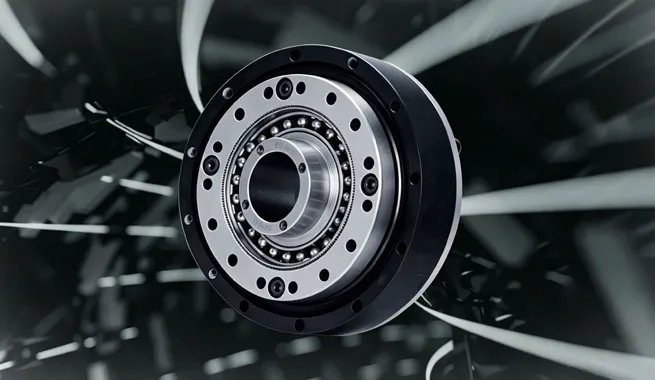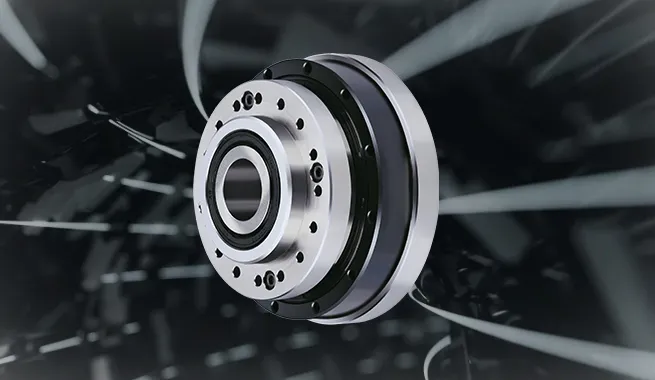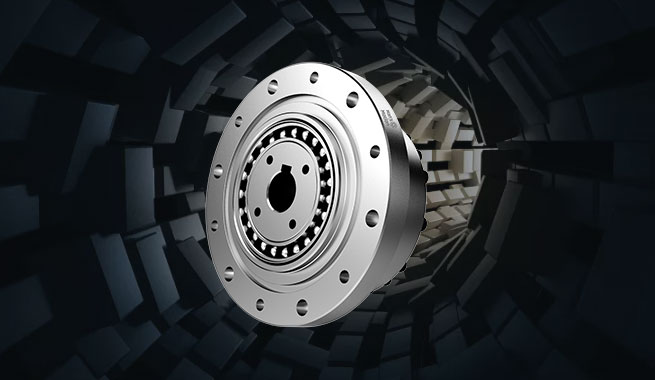
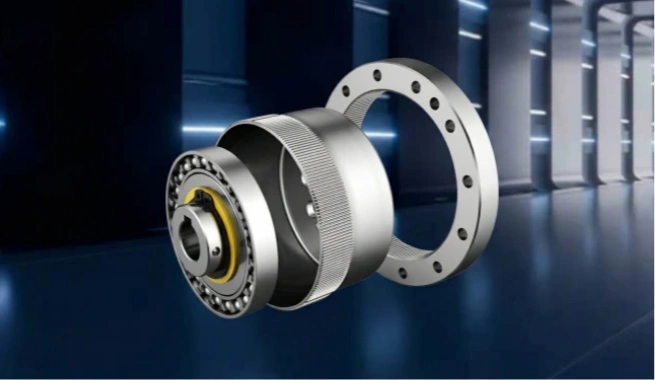
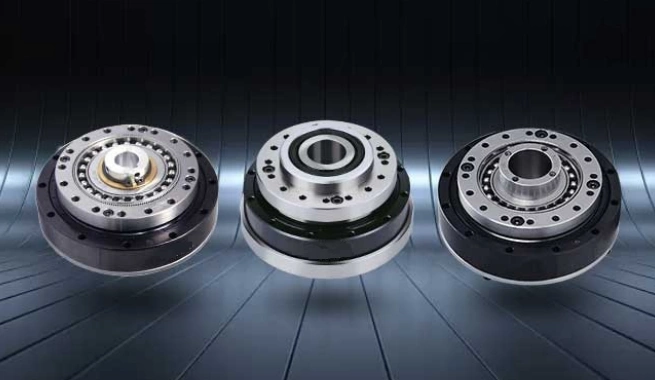
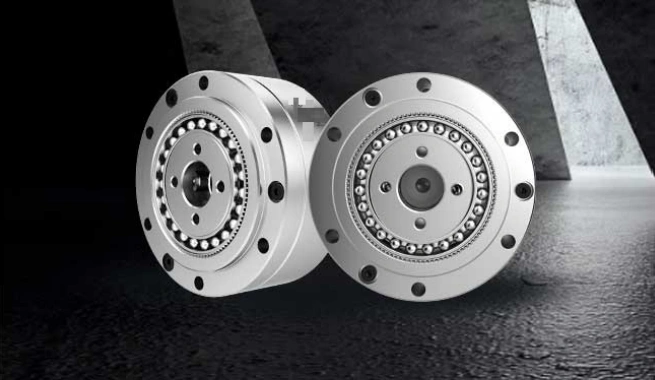
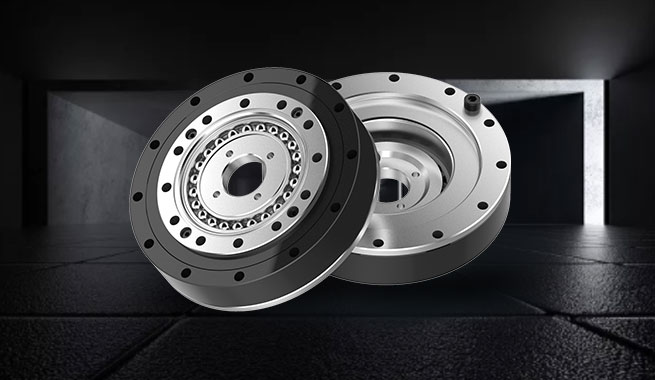
A harmonic reduction gear is a type of speed reduction device, primarily consisting of a flexible gear, a rigid gear, and a wave generator. In some definitions, it also includes flexible bearings. It operates based on the principle of harmonic drive, which was developed as a new gear transmission method in the late 1950s. The harmonic reduction gear works by having the wave generator and the flexible gear fit together in such a way that, during rotation, the flexible gear undergoes elastic deformation and meshes with the rigid gear to transmit motion and power.
Precision Measurement Indicators
The precision level of the harmonic reduction gear is mainly measured by transmission error and backlash.
Precision Grade Classification
If the transmission error is less than or equal to 30 arc-seconds, it is classified as a high-precision reduction gear and denoted by the capital letter "A" (Grade A).
If the transmission error is greater than 30 arc-seconds but less than or equal to 1 arc-minute, it is classified as a precision reduction gear and denoted by the capital letter "B" (Grade B).
If the transmission error is greater than 1 arc-minute but less than or equal to 3 arc-minutes, it is classified as a standard reduction gear and denoted by the capital letter "C" (Grade C).
High Load Capacity: This is because many teeth are meshing simultaneously in the harmonic gear transmission. In double-wave transmission, more than 30% of the total teeth can mesh at the same time. Additionally, the flexible gear uses high-strength materials, and the teeth are in surface contact with each other.
High Transmission Precision: Since many teeth mesh at the same time, the errors are averaged, and the multi-tooth meshing compensates for transmission errors. Therefore, the transmission precision is high. When the gear precision grade is the same, the transmission error is only about 1/4 that of standard cylindrical gears. The radius of the wave generator can also be slightly adjusted to increase the deformation of the flexible gear, making the tooth gap very small or even achieving zero backlash meshing. As a result, the harmonic reduction gear has minimal backlash, making it ideal for reverse motion applications.
High Efficiency and Smooth Motion: Due to the uniform radial movement of the flexible gear teeth during transmission, the relative sliding speed of the teeth is extremely low, even when the input speed is high (typically only a percentage of that of standard involute gears). This results in low wear and high efficiency (ranging from 69% to 96%). Additionally, since both sides of the teeth participate in meshing during engagement and disengagement, there are no impact phenomena, leading to smooth motion.
Simple Structure, Few Parts, Easy Installation: It consists of only three basic components, and the input and output shafts are coaxial, making the structure simple and easy to install.
Compact and Lightweight: Compared to conventional reduction gears, the harmonic reduction gear has a volume reduction of up to 2/3 and a weight reduction of 1/2, while maintaining the same output torque.
Ability to Transmit Motion in Confined Spaces: The flexible characteristic of the flexible gear allows this precious advantage, which cannot be matched by existing other transmission methods.
Industrial Robot Field
There is a high demand for harmonic reduction gear in the field of industrial robots and collaborative robots, especially in multi-joint robots and SCARA robots, where the demand is significant. On average, each robot requires three harmonic reduction gears. Under the support of China's "Made in China 2025" policy, the domestic robot industry is developing rapidly. In 2020, the production of industrial robots in China was approximately 237,000 units, with a demand for around 68,600 harmonic reduction gears. It is expected that the Chinese robot industry will continue to grow rapidly in the coming years, and there is huge potential for the development of the domestic harmonic reduction gear market.
Other High-End Equipment Fields
In addition to robotics, harmonic reduction gear is also used in high-end equipment fields such as CNC machine tools, medical devices, aerospace, and more. They are widely used in service robots, robotic arms, carton packaging machinery, measurement/analysis/test machinery, large telescopes, cable manufacturing equipment, precision packaging machinery, meteorological equipment, advanced instruments, and many other fields. They are also increasingly applied in aviation, aerospace, energy, maritime, shipbuilding, bionic devices, common military weapons, machine tools, instruments, electronics, mining, metallurgy, transportation, hoisting equipment, petrochemical machinery, textile machinery, agricultural machinery, and medical equipment. Particularly in servo systems with high dynamic performance, harmonic transmission shows its superiority.
Contact us today to discuss your project requirements and find the perfect harmonic drive solutions.
Contact Us Now
Hi, I am Sophie from Shenzhen PICEA Motion Technology Co, Ltd. I have been working in overseas business trade for more than 5 years. PICEA Motion is a professional manufacturer of precision harmonic gears. Our company integrates R&D, production, sales, and after-sales services.