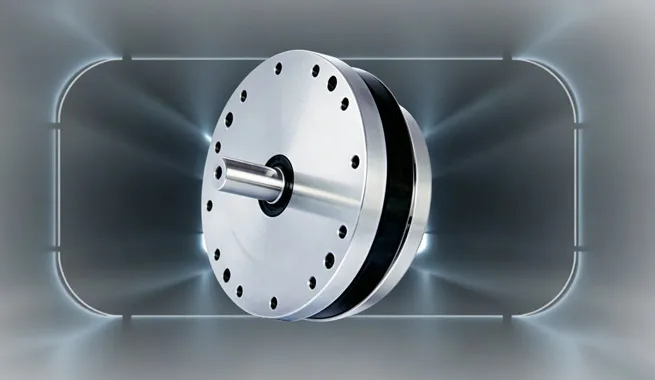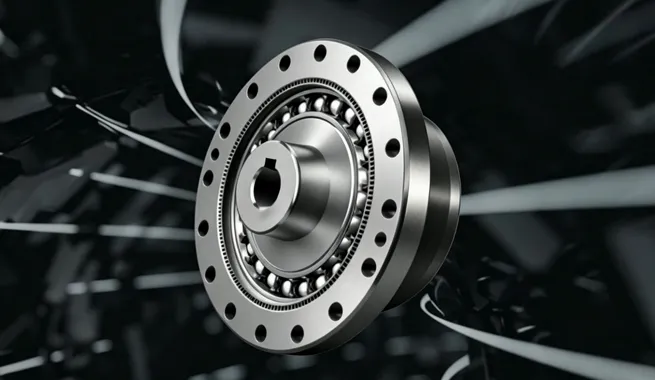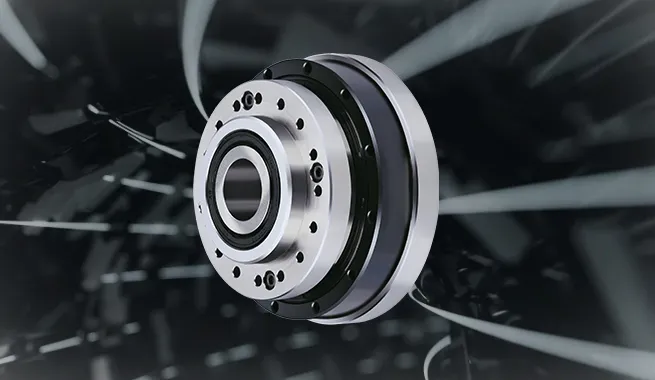
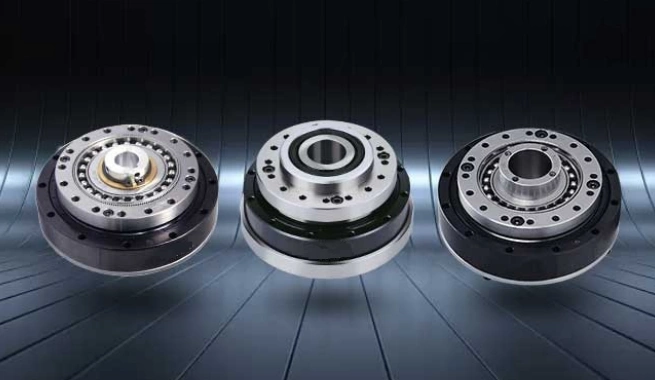
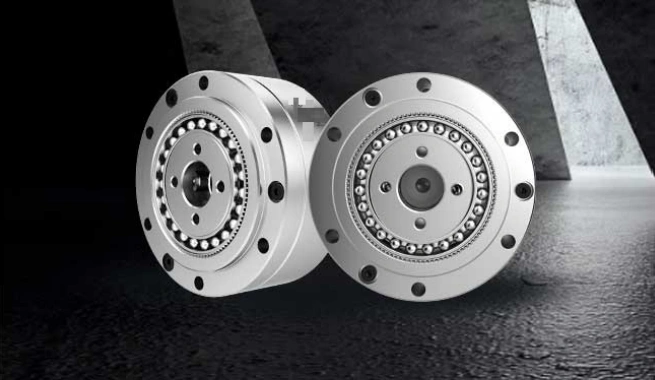
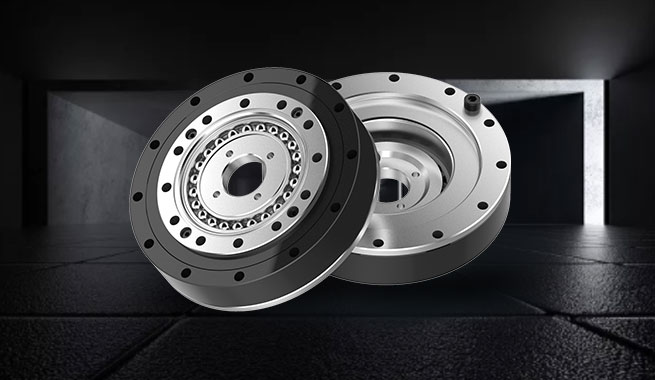
In the agile joints of industrial robots, in the precise pointing mechanisms of spacecraft, and even inside the autofocus system of a high-end camera, lies a revolutionary technology that has reshaped the boundaries of mechanical transmission—the harmonic reduction gear. By harnessing controlled elastic deformation, this gear achieves extreme precision, lightweight design, and near-zero backlash, fundamentally transforming modern motion control. This article unpacks its technological essence and reveals why it has become the "core muscle" of advanced manufacturing.
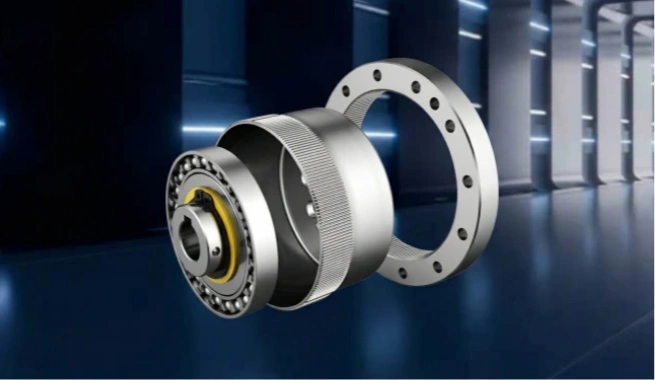
The harmonic reduction gear was first introduced in the 1950s, breaking away from the rigid transmission principles of conventional gears. Its operation revolves around three key elements: the wave generator, the flexspline, and the circular spline. As the wave generator rotates, it forces the thin-walled flexspline to undergo precise elastic deformation, engaging its teeth with those of the circular spline in a periodic manner. This unique "flexible against rigid" mechanism allows single-stage reduction ratios ranging from 30 to 320, while multi-stage combinations can exceed 30,000:1. Compared with traditional gearboxes, the transmission error of a harmonic reduction gear can be controlled within 1–5 arc seconds, equivalent to dividing a full circle into over 250,000 parts. This makes it one of the most precise gear systems in existence and a benchmark for motion accuracy.

At its core, the harmonic reduction gear achieves simplicity without compromising sophistication. The flexspline is a thin, flexible, yet resilient component designed to absorb deformation while maintaining tooth engagement accuracy. The wave generator, usually an elliptical bearing assembly, ensures that deformation is uniform and repeatable, transmitting motion smoothly to the circular spline. This compact structure enables the gear to deliver high torque density while reducing size and weight. Companies like PICEA MOTION, with advanced engineering laboratories and precision processing equipment imported from abroad, have refined these structural elements to push the boundaries of performance. Their cooperation with leading universities, including the University of Tokyo and the University of Tsukuba, has further strengthened research into optimizing design and durability.

The hallmark of harmonic reduction gears lies in their unrivaled performance metrics. Near-zero backlash ensures that robotic joints respond instantly and accurately to control signals, a necessity in fields such as industrial automation and surgical robotics. High torque capacity in compact dimensions makes them ideal for lightweight robotic arms without sacrificing strength. Moreover, their efficiency and reliability have earned widespread adoption, with PICEA MOTION supplying solutions to over 300 customers worldwide. Recognized by awards such as the Industrial Design "Red Sails Award" and the World Robotics Congress's Most Innovative Product Award, their gears are proven not only in controlled environments but also in demanding real-world applications.

The influence of harmonic reduction gears spans industries and environments. In robotics, they power precise joint movements, enabling collaborative robots to handle delicate assembly or human interaction with finesse. In aerospace, they ensure spacecraft orientation systems maintain accuracy even under extreme conditions. In medical technology, these gears allow surgical robots to perform minimally invasive procedures with unparalleled precision, navigating through arteries as deftly as they guide instruments in an operating room. From deep space exploration to life-saving interventions inside the human body, harmonic reduction gears are quietly shaping the future of human-machine synergy.

The philosophy behind harmonic reduction gears reflects the wisdom of flexibility over rigidity. While traditional gears struggle against the limits of precision and miniaturization, harmonic reduction gears create a new dimension through elastic deformation. Today, advances in material science are making these components lighter, stronger, and more fatigue-resistant, extending their lifespan even under continuous operation. At the same time, integration with artificial intelligence in robotics is elevating their role, enabling adaptive and predictive motion control. With breakthroughs in humanoid robots, brain-machine interfaces, and space manufacturing on the horizon, this technology is no longer confined to the upstream of industrial supply chains—it is becoming the very language of intelligent motion.

As the coming decade unfolds, harmonic reduction gears will not only serve as the foundation of mechanical transmission but also as the enablers of expressive robotic capabilities. Whether a humanoid robot lifts heavy machinery with strength or gently hands a rose to a human, the delicate balance of precision and softness rests within the wave-like deformation of its metallic core.
Contact us today to discuss your project requirements and find the perfect harmonic drive solutions.
Contact Us Now
Hi, I am Sophie from Shenzhen PICEA Motion Technology Co, Ltd. I have been working in overseas business trade for more than 5 years. PICEA Motion is a professional manufacturer of precision harmonic gears. Our company integrates R&D, production, sales, and after-sales services.