Quadruped robots are no longer experimental systems confined to research labs. Today, they are actively deployed in real-world industrial environments—from autonomous inspection in high-voltage substations to routine monitoring on offshore oil platforms.
In these scenarios, mobility is only part of the equation. The real challenge is long-term mechanical reliability under harsh and unpredictable conditions.
At the core of this challenge lies the performance of robotic joint actuators, particularly the gear transmission system. For engineering teams moving from prototype to commercialization, selecting the right reducer is not just a design choice—it is a reliability decision.
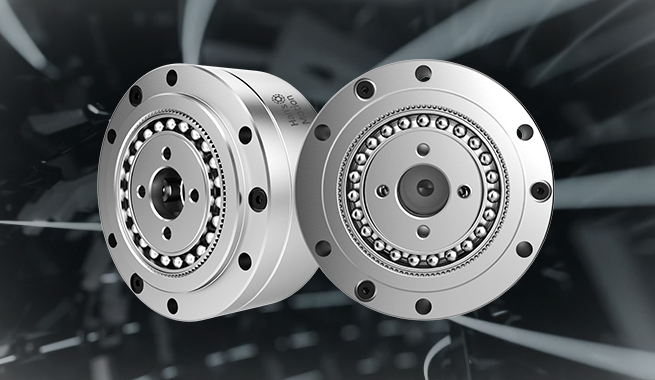
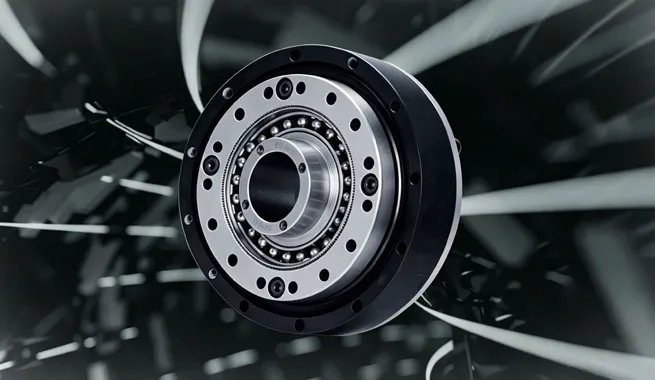
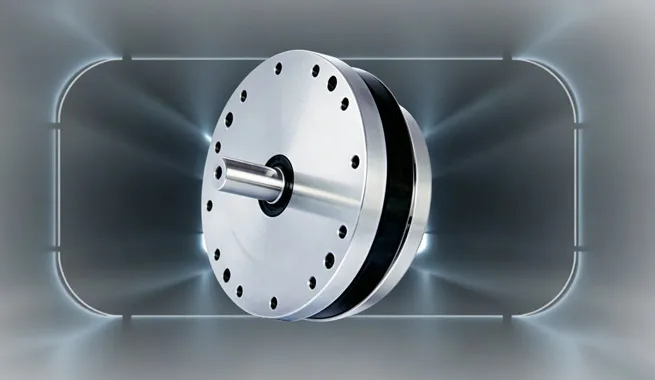
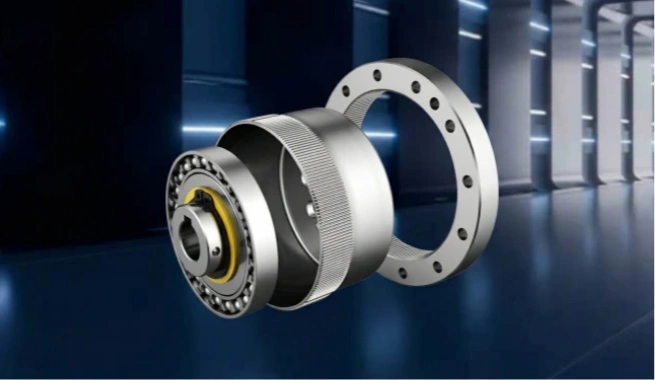
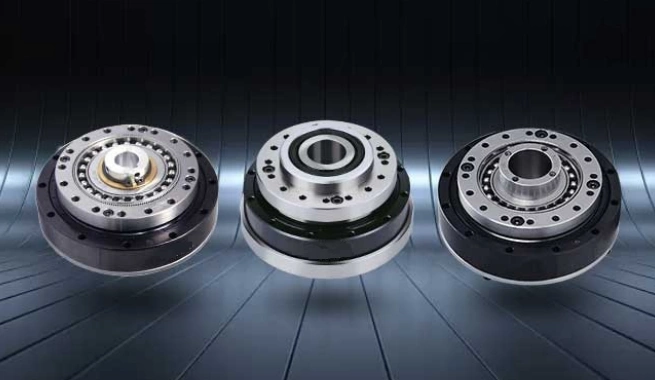
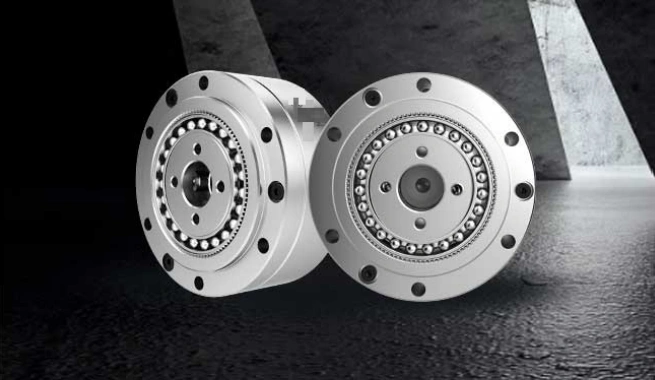
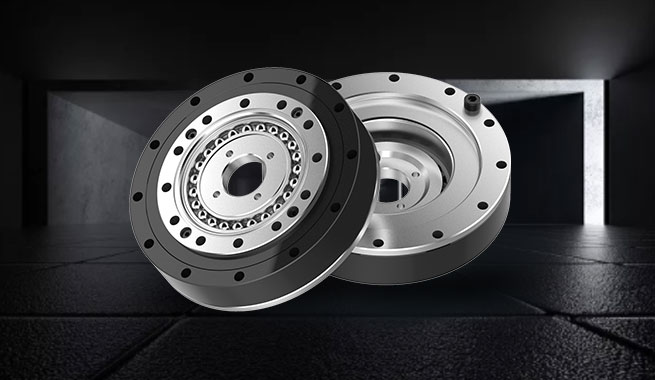
Among the available technologies, harmonic drives (zero backlash gear reducers) have emerged as a key enabler for stable and precise quadruped robot operation.
Unlike wheeled robots, quadruped systems rely on multi-joint coordination and dynamic load redistribution to navigate unstructured environments.
When an inspection robot:
Climbs industrial stairs
Walks across narrow steel gratings
Steps over debris or obstacles
…the load across its hip and knee joints changes continuously and often abruptly.
This creates two critical requirements:
High positional accuracy to maintain balance
Consistent torque output under dynamic conditions
Traditional gear systems often struggle to meet both simultaneously.
Harmonic drives offer a unique combination of characteristics that align with these demands:
High repeatability: Enables precise foot placement, critical for stability on narrow or uneven surfaces
Zero backlash: Eliminates motion delay, improving real-time control response
High torque density: Supports heavy payloads (e.g., LiDAR, PTZ cameras, gas sensors) without increasing joint size
For industrial inspection robots, this translates into more stable locomotion, fewer control errors, and improved mission reliability.
A robot that performs well in a controlled lab environment may fail quickly in the field. Industrial deployments introduce factors that significantly impact drivetrain performance:
Dust and particulate contamination
Moisture and chemical exposure
Wide temperature fluctuations
Continuous duty cycles
To ensure long-term reliability, harmonic drives must be engineered specifically for these conditions.
At Picea Motion Drive, harmonic drive systems are developed with industrial deployment in mind—not just theoretical performance.
Industrial environments expose robotic joints to dust, water, and corrosive substances. Without proper sealing, these contaminants can quickly degrade internal components.
Picea harmonic drives incorporate:
Enhanced sealing structures
Optimized internal lubrication systems
Protection against particle ingress
This significantly reduces maintenance frequency and increases mean time between failures (MTBF).
Temperature variation is one of the most overlooked factors in robotic actuator design.
In outdoor or semi-exposed environments, robots may experience:
Cold starts in near-freezing conditions
High operating temperatures during daytime use
Standard lubricants may become too viscous in cold conditions or too thin at high temperatures, leading to:
Increased motor load
Reduced efficiency
Accelerated wear
Picea utilizes wide-temperature-range lubrication solutions, ensuring:
Stable friction characteristics
Predictable actuator performance
Consistent energy consumption
Beyond performance, ease of integration is a critical factor for robotics engineers.
Picea harmonic drives are designed to fit seamlessly into modern robotic architectures, offering:
Compact and lightweight form factors
Ultra-flat configurations for space-constrained joints
Hollow shaft designs for internal cable routing
The hollow shaft feature is particularly valuable in quadruped robots, allowing:
Safe routing of power and signal cables
Reduced risk of cable wear or snagging
Cleaner and more reliable mechanical design
Additionally, actuator interfaces can be customized to match common servo motors, simplifying the transition from existing designs.
One of the biggest challenges in robotics is bridging the gap between a working prototype and a commercially viable product.
At this stage, mechanical failures become costly:
Unexpected downtime
Increased maintenance requirements
Reduced customer trust
Selecting a high-performance harmonic drive is not just about motion—it is about ensuring consistent operation in real-world conditions over time.
As industrial quadruped robots continue to expand into critical applications, the demand for precision, durability, and environmental resilience will only increase.
Harmonic drives provide a proven solution by combining:
Zero backlash precision
High torque density
Compact integration
Robust performance in harsh environments
For engineers designing next-generation robotic platforms, they are no longer optional—they are a foundational component.
If you are developing industrial inspection robots or other legged robotic systems, choosing the right joint actuator can define your product's success in the field.
Picea Motion Drive provides high-performance harmonic drive solutions engineered for real-world robotics applications.
Contact our team to discuss your project requirements, request technical data, or explore customized solutions for your quadruped robot joints.
Contact us today to discuss your project requirements and find the perfect harmonic drive solutions.
Contact Us Now
Hi, I am Sophie from Shenzhen PICEA Motion Technology Co, Ltd. I have been working in overseas business trade for more than 5 years. PICEA Motion is a professional manufacturer of precision harmonic gears. Our company integrates R&D, production, sales, and after-sales services.