When you watch recent demos of Figure 01 or Tesla’s Optimus smoothly picking up an egg or making a cup of coffee, it’s easy to focus on the AI and computer vision. But for mechanical engineers and robotics developers, the real breakthrough isn’t in the software — it’s in the joints.

The reality of building a humanoid robot is simple: no matter how advanced the AI is, the robot can only perform as well as its mechanical structure. If the actuators are heavy, inaccurate, or weak, the robot will never achieve human-level movement.
This is why harmonic gearboxs are becoming the core transmission technology inside next-generation humanoid robots.
Designing a traditional industrial robot arm is relatively straightforward. The base is fixed to the ground, weight is not a critical issue, and multi-stage gearboxes can be used without major limitations.
Humanoid robots are completely different.
Every joint must support the robot’s own body weight while maintaining balance during movement. Even a small increase in weight in the shoulder, elbow, or knee can significantly increase the load on the rest of the system. This creates a chain reaction:
Heavier joints require stronger motors
Stronger motors increase power consumption
Higher power consumption reduces battery life
Reduced battery life limits real-world usability
This is why lightweight and high-precision transmission systems are essential for humanoid robotics.
Many robotics startups initially try to use planetary gearboxes because they are widely available and relatively affordable. However, in humanoid robots, they quickly reveal several major limitations.
To achieve high reduction ratios such as 100:1 or 160:1, planetary gearboxes usually require multiple stages. This makes them longer, heavier, and more difficult to integrate into compact joints like wrists or elbows.
Even high-quality planetary gearboxes have small mechanical clearance between gear teeth. In large robotic joints, even 2–3 arc-minutes of backlash can lead to visible positioning errors at the end effector. For humanoid robots that need to handle fragile objects or perform precise movements, this is a critical problem.
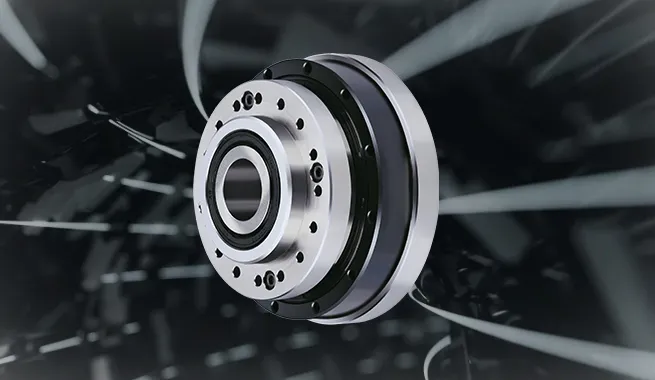
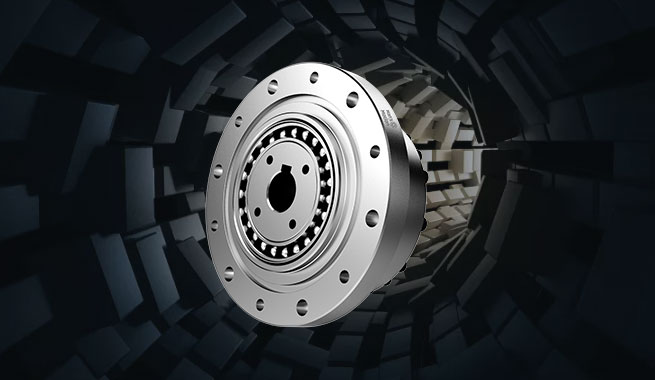
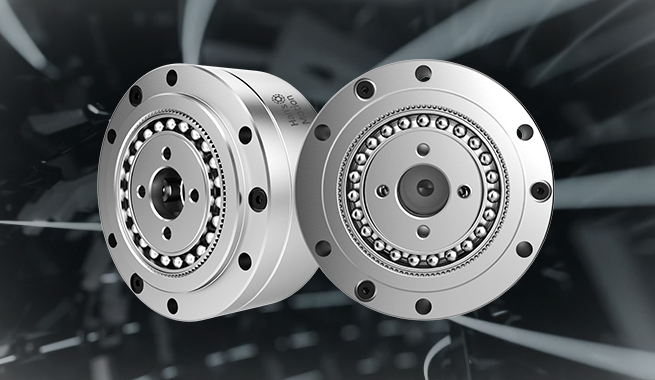
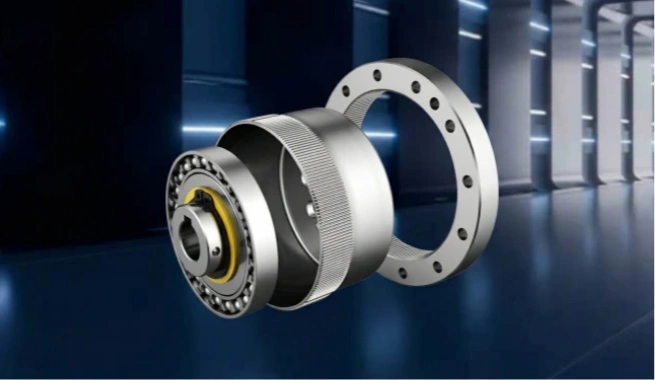
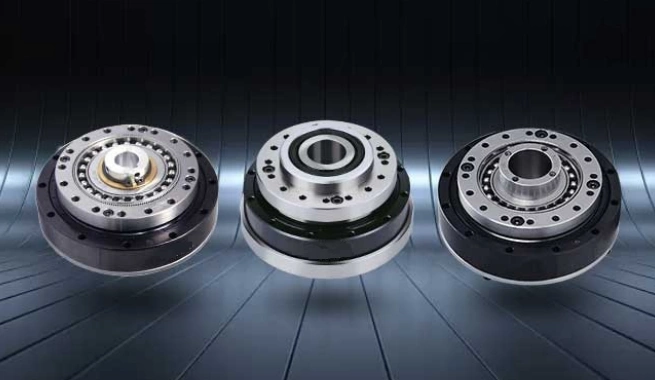
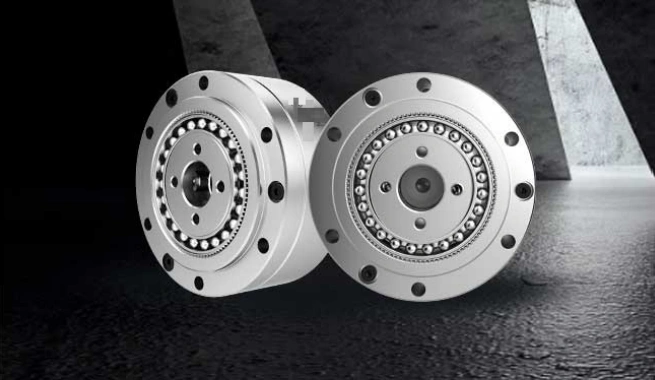
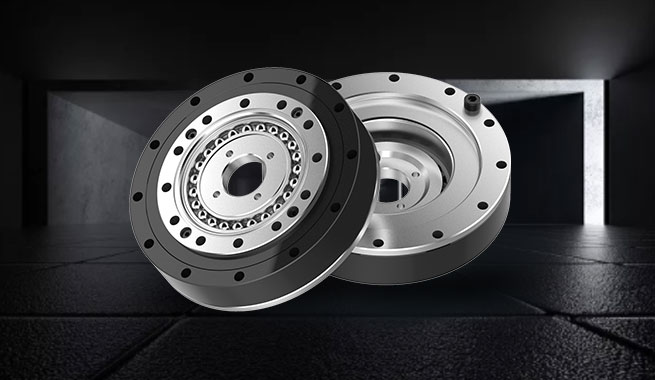
Harmonic gearboxs (also known as strain wave gears) solve the key limitations of traditional gear systems. By using a flexible metal component called a flexspline that continuously engages with a rigid circular spline, harmonic gearboxs offer both high precision and high torque in a compact structure.
A harmonic gearbox can achieve a reduction ratio of 100:1 to 160:1 in a single stage. This allows engineers to design lightweight robotic joints without sacrificing torque output.
For humanoid robots, this means:
Lighter arms and legs
Lower energy consumption
Better balance and walking stability
Longer battery life
Humanoid robots are designed to work in human environments — opening doors, holding tools, and interacting with delicate objects. These tasks require extremely precise motion control.
Harmonic gearboxs provide near-zero backlash, ensuring:
Smooth and stable joint movement
Accurate positioning
Better force control
More natural, human-like motion
This is one of the key reasons why leading humanoid robot companies are choosing harmonic gearbox solutions for critical joints such as shoulders, elbows, hips, and knees.
Developing one humanoid robot in a laboratory is already difficult. Producing thousands of robots per year is an even bigger challenge.
A typical humanoid robot may require 30–40 degrees of freedom (DoF), which means dozens of high-precision reducers are needed in every unit. If manufacturers rely only on traditional suppliers, the cost and lead time can become a major barrier to commercialization.
As the humanoid robotics industry moves from prototype development to mass production, the demand for high-precision, lightweight, and cost-efficient harmonic gearboxs will continue to grow rapidly.
As humanoid robots move from research labs to real-world commercial applications, the importance of high-performance mechanical components is becoming increasingly clear. Advanced AI may define how a robot thinks, but precision transmission systems define how it moves, balances, and interacts with the world.
Harmonic gearboxs are not just another mechanical component. They are a key enabling technology behind lightweight humanoid structures, accurate motion control, and human-level dexterity. As the demand for high-torque-density, compact, and zero-backlash solutions continues to grow, harmonic gearbox technology will play an essential role in the next stage of humanoid robot development.
For robotics manufacturers looking to scale from prototype to mass production, choosing the right transmission solution is no longer optional — it is a strategic decision that directly impacts performance, cost, and long-term competitiveness.
Contact us today to discuss your project requirements and find the perfect harmonic drive solutions.
Contact Us Now
Hi, I am Sophie from Shenzhen PICEA Motion Technology Co, Ltd. I have been working in overseas business trade for more than 5 years. PICEA Motion is a professional manufacturer of precision harmonic gears. Our company integrates R&D, production, sales, and after-sales services.