If you've walked a factory floor recently, you've seen them. Collaborative robots—or cobots—are everywhere, working shoulder-to-shoulder with human operators. They are dispensing adhesives, tending CNC machines, and palletizing boxes.
But as an engineer, when you look at a sleek, 6-axis cobot, you know the real magic isn’t just in the AI vision system or the software path planning. The true bottleneck in robotic design is entirely mechanical. It’s about what you cram into the joints.
Over the years, consulting with automation teams here at Picea Motion Drive, I've had countless conversations about joint design. And the conclusion is almost always the same: if you want a cobot to be safe, highly repeatable, and compact, harmonic reducers aren't just an option. They are the absolute backbone of the system.
Here is a candid, engineer-to-engineer breakdown of why these specific gearboxes dominate the robotics industry, and how you can avoid common design traps when sourcing them.
Designing a robotic joint is a nightmare of compromises. You need to fit a servo motor, a high-resolution encoder, a holding brake, and a gearbox into an enclosure roughly the size of a grapefruit.
On top of that, cobots are designed to stop instantly if they bump into a human. That means the entire arm needs low inertia. If you use a massive, heavy, multi-stage planetary gearbox at the shoulder joint, the motors have to work twice as hard just to lift the arm's own weight, leaving you with a pathetic payload capacity.
This is exactly where the harmonic gear working principle shines.
.png "HMHS-V-无logo(1).png")
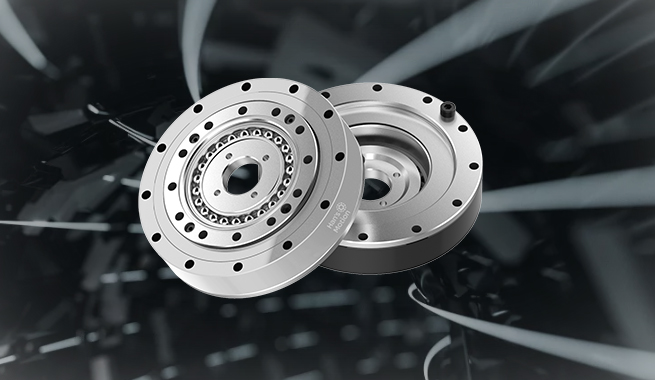
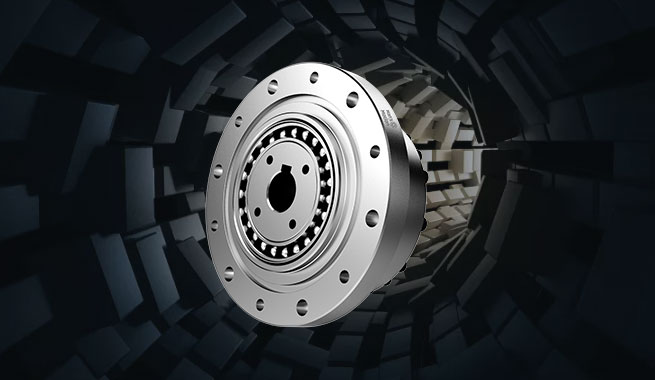
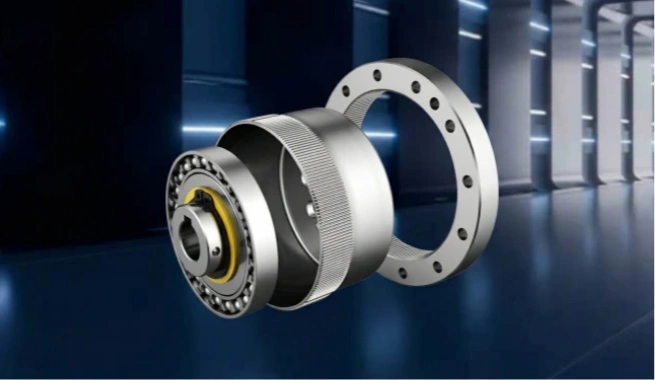
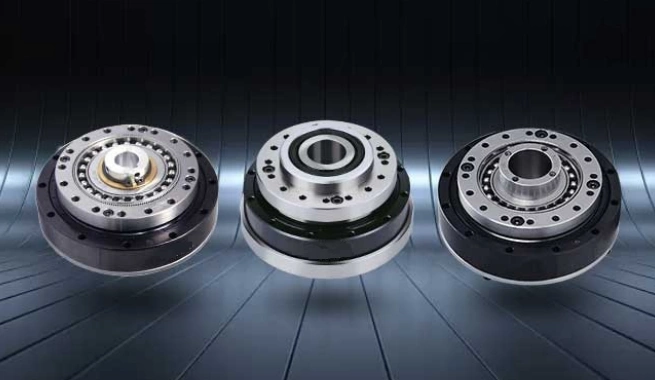
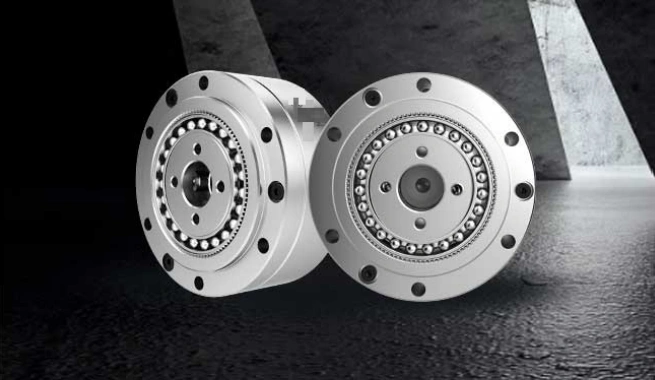
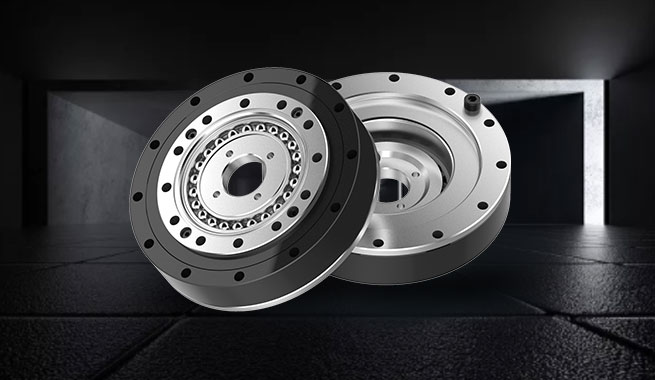
Because harmonic reducers utilize a flexible metal cup (the flexspline) rather than a complex arrangement of heavy, rigid planetary gears, their torque-to-weight ratio is unmatched. You can achieve massive reduction ratios (like 100:1 or 160:1) in a single, incredibly thin stage. This drastically lowers the overall weight of the joint, allowing your cobot to lift heavier payloads while consuming less power.
Let’s do some quick math. If you have a traditional gearbox with even 3 arc-minutes of backlash at the shoulder joint, and your robotic arm has a reach of 1.2 meters, that tiny bit of "play" gets magnified. By the time it reaches the tool tip, you're off by millimeters.
If your cobot is supposed to be soldering a PCB or inserting a microscopic screw, that variance is a catastrophic failure. Harmonic reducers maintain constant tooth engagement at two opposite points, giving you a true zero backlash reducer. The arm goes exactly where the code tells it to go. Every single time.
Have you ever seen a robotic arm rip its own cables out because they were routed on the outside of the joints? It's an expensive mistake.
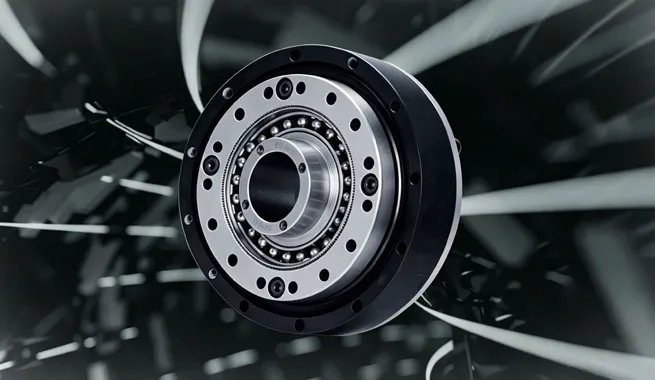
Many custom harmonic drives are designed with a large hollow shaft directly through the center of the gearset. This allows mechanical designers to route power cables, ethernet lines, and pneumatic hoses right through the center of rotation. It keeps the cobot profile sleek, prevents cable snagging, and drastically improves the lifespan of the wiring.
Here is an independent viewpoint you might not hear from standard sales reps: Stop sizing your gearboxes based purely on nominal running torque. I see this mistake constantly. An engineering team calculates the payload, picks a reducer that matches that torque rating, and calls it a day. But they forget about Emergency Stops (E-stops).
When a cobot is moving at full speed and hits an operator or a solid table, the safety sensors trigger the brakes instantly. All of that kinetic energy slams directly into the teeth of the flexspline. If you haven't calculated for peak shock loads, you will shear the teeth right off your brand-new reducer. Always size your robotic joint reducer with a healthy safety margin for dynamic impact, not just static lifting.
.png "PMCD-II(1).png")
Ten or fifteen years ago, there was an unwritten rule in robotics: if you wanted a reliable precision motion control setup, you had to buy from legacy Japanese or European monopolies. You paid astronomical prices, and you waited 6 to 8 months for delivery.
Let's be real—the manufacturing landscape has fundamentally changed.
Today, utilizing top-tier 5-axis CNC machining and advanced metallurgy, a dedicated China harmonic reducer manufacturer can produce flexsplines and circular splines that match—and often exceed—the strict tolerances required by tier-one robotics companies.
At Picea Motion Drive, we've built our reputation on disrupting this old monopoly. We provide the same zero-backlash, high-torque performance that engineers demand, but with a supply chain that actually makes sense for modern production schedules and BOM budgets. You shouldn't have to choose between cutting-edge precision and keeping your project financially viable.
Contact us today to discuss your project requirements and find the perfect harmonic drive solutions.
Contact Us Now
Hi, I am Sophie from Shenzhen PICEA Motion Technology Co, Ltd. I have been working in overseas business trade for more than 5 years. PICEA Motion is a professional manufacturer of precision harmonic gears. Our company integrates R&D, production, sales, and after-sales services.