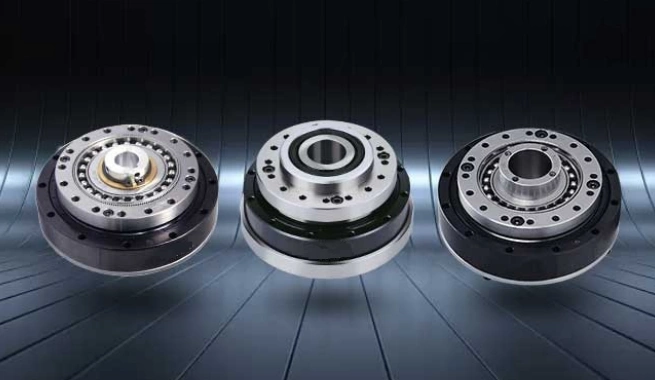
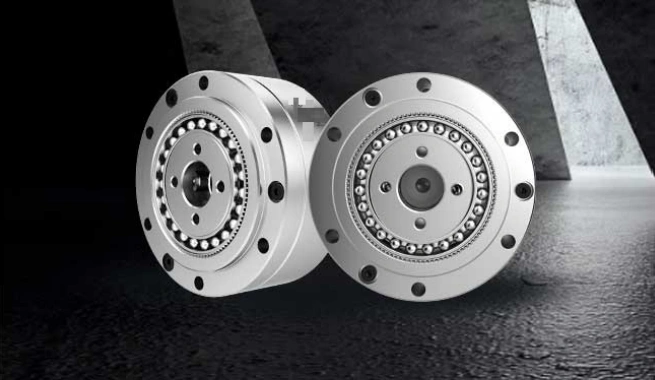
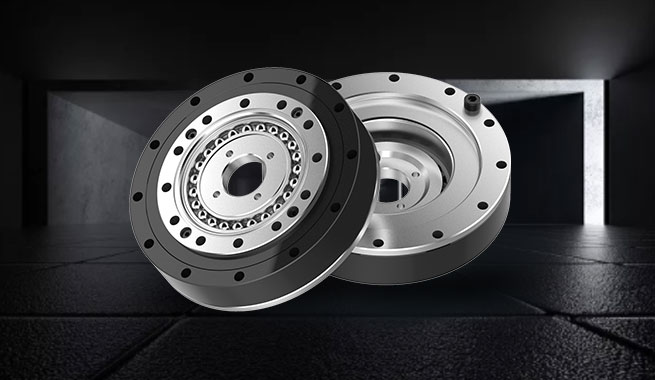
Designing a legged robot—whether humanoid or quadruped—is fundamentally a joint actuator problem.
Behind every stable step, precise movement, or dynamic jump lies a carefully selected gear reducer that determines:
Torque output
Motion accuracy
System weight
Long-term reliability
Yet many engineering teams—especially in early development stages—either over-specify their reducers (adding unnecessary weight and cost) or underestimate real-world loads, leading to premature failures.
This guide provides a practical framework for selecting the right gear reducer for legged robots, based on real engineering considerations rather than theoretical specs.
The first mistake many engineers make is sizing reducers based only on static torque requirements.
In reality, legged robots operate under dynamic loads, including:
Walking and trotting cycles
Sudden direction changes
Ground impact (heel strike or foot landing)
Uneven terrain compensation
Key takeaway:
Always calculate:
Continuous torque (normal operation)
Peak torque (impact and acceleration)
A safe design typically requires a 1.5×–3× safety margin depending on application intensity.
In legged robots, weight is not just a structural factor—it directly affects:
Energy efficiency
Battery life
Mobility and agility
A heavier joint requires more torque to move, creating a negative loop.
High torque density (Nm/kg)
Compact form factor
Minimal added inertia
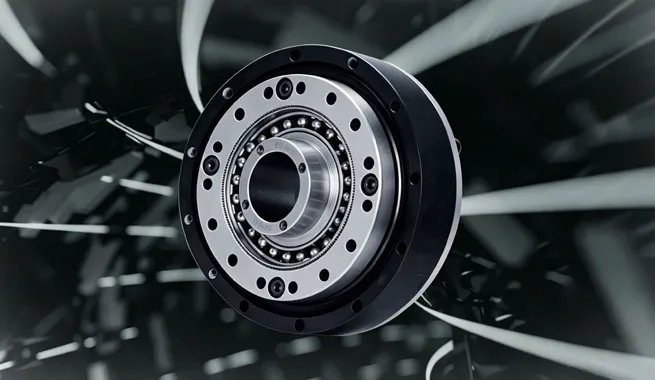
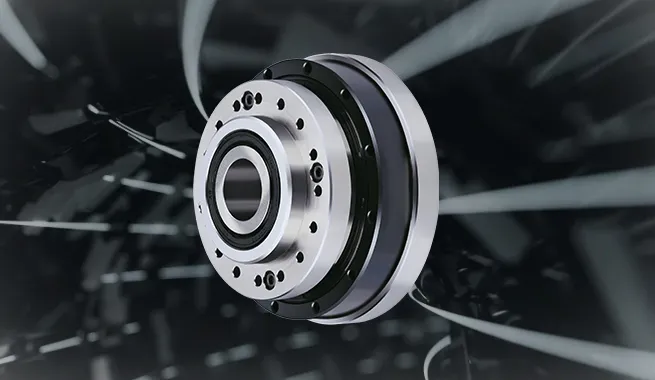
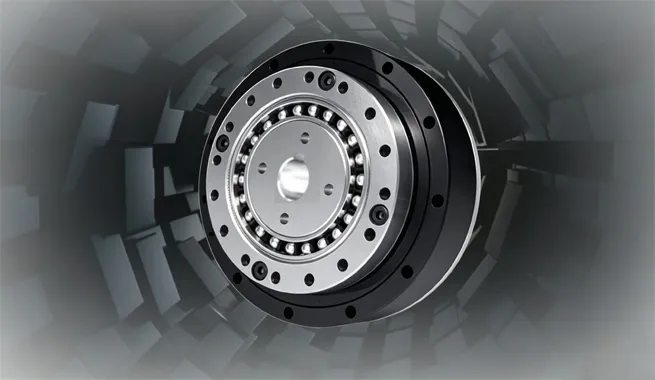
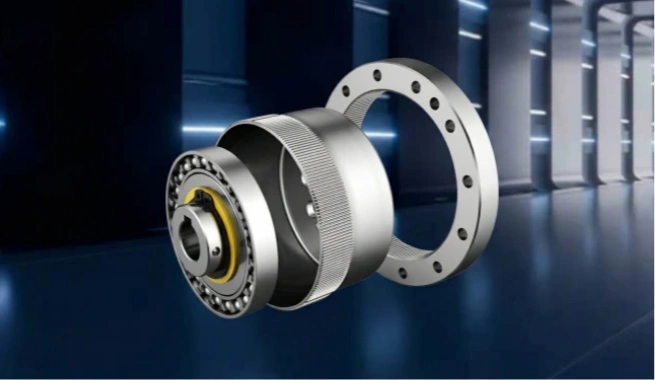
Harmonic drives are often preferred because they deliver high reduction ratios in a lightweight structure, making them ideal for robotic joints.
Precision is critical in legged locomotion.
Even small backlash can lead to:
Delayed motion response
Gait instability
Reduced control accuracy
Planetary gears → small but unavoidable backlash
Harmonic drives → near-zero backlash
For applications requiring dynamic balance and precise foot placement, zero-backlash systems are strongly recommended.
Every step a robot takes introduces impact forces into the drivetrain.
If not properly managed, this can lead to:
Gear tooth wear
Flexspline fatigue (in harmonic drives)
Sudden mechanical failure
Add Series Elastic Actuators (SEA)
Use external damping mechanisms
Optimize gait to reduce peak impact
Important insight:
Instead of avoiding harmonic drives due to shock concerns, design the system to absorb impact.
Modern legged robots are highly integrated systems with:
Motors
Encoders
Power cables
Communication lines
Compact axial length
Lightweight housing
Hollow shaft for cable routing
Hollow shaft reducers allow cables to pass through the joint center, which:
Prevents cable twisting
Improves durability
Simplifies mechanical layout
Not all legged robots have the same requirements.
Priority: reliability, durability
Environment: dust, moisture, temperature variation
Recommendation: sealed harmonic drives with robust lubrication
Priority: flexibility, rapid iteration
Recommendation: compact, modular reducers
Priority: shock resistance + torque
Recommendation: harmonic drive + SEA combination
Lab performance ≠ field performance.
Make sure your reducer can handle:
Temperature fluctuations
Contamination (dust, water, chemicals)
Continuous duty cycles
Look for:
Proper sealing design
Wide-temperature lubricants
Proven MTBF data
Before finalizing your selection, check if you are making these common errors:
❌ Using the same reducer across all joints
❌ Ignoring dynamic loads
❌ Underestimating backlash impact
❌ Overlooking cable routing
❌ Choosing based on price alone
At Picea Motion Drive, we work closely with robotics teams to solve exactly these challenges.
Our harmonic drive solutions are designed specifically for:
Legged robot joint actuators
High torque density applications
Zero-backlash precision control
Harsh industrial environments
We also support:
Custom configurations
Integration with various servo motors
Engineering consultation based on your load profiles
Choosing the right gear reducer is one of the most critical decisions in legged robot design.
A well-selected reducer improves:
Stability
Efficiency
Lifespan
Overall system performance
A poor choice can limit your robot before it even leaves the lab.
Contact us today to discuss your project requirements and find the perfect harmonic drive solutions.
Contact Us Now
Hi, I am Sophie from Shenzhen PICEA Motion Technology Co, Ltd. I have been working in overseas business trade for more than 5 years. PICEA Motion is a professional manufacturer of precision harmonic gears. Our company integrates R&D, production, sales, and after-sales services.