Designing an industrial-grade quadruped robot is an exercise in extreme mechanical compromise. Engineers are constantly battling to balance weight, payload capacity, and battery life, all while ensuring the robot can navigate unpredictable terrains. Whether developing agile inspection robots or heavy-duty quadruped platforms, the secret to superior mobility lies in the joints.
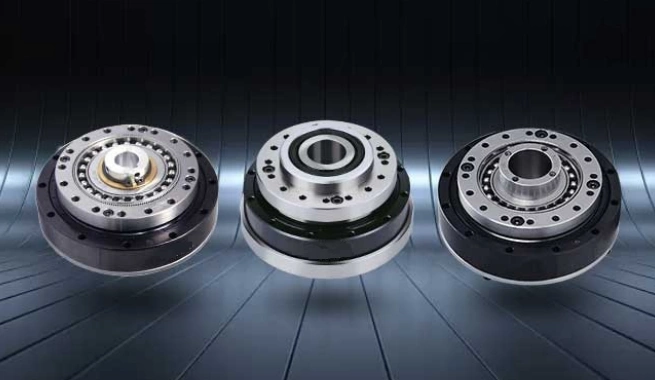
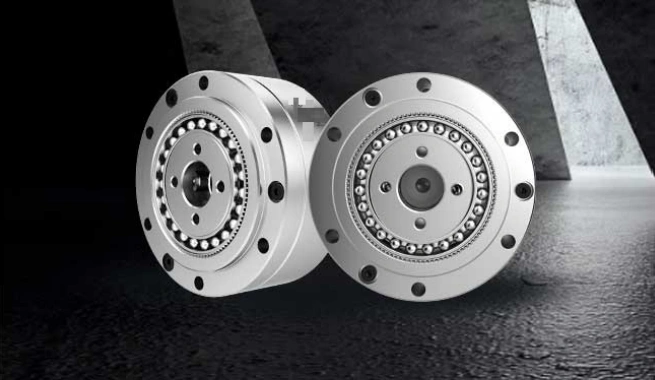
For advanced quadruped robot joint design, the choice of actuator and gear reducer dictates the overall kinematics and reliability of the machine. This is why leading robotics manufacturers are moving away from traditional planetary gears and relying almost exclusively on high-precision strain wave gearing.
In this guide, we will explore the critical metrics engineers must evaluate when selecting harmonic drives for robotic legs, and how to source components that offer both elite performance and supply chain reliability.
A robotic leg does not operate in a steady state. It is subjected to constant impact, sudden reversals, and varying loads. Therefore, the gear reducers inside the hip and knee joints must meet very specific dynamic criteria.
When a four-legged robot trots, jumps, or unexpectedly steps into a depression, the ground exerts a massive reaction force back up through the leg. If the joint actuator is rigidly locked, this impact force will shatter the internal gear teeth.
High back-drivability is essential. A properly integrated high torque harmonic drive allows the joint to absorb these shock loads efficiently. By combining strain wave gearing with proprietary proprioceptive motor control, the robot can achieve a "spring-like" compliance, protecting the hardware and enabling fluid, biological-like movement across uneven industrial environments.
Industrial quadruped robots are often deployed in environments like offshore oil rigs or electrical substations, where they must climb stairs and leap over obstacles. These actions generate intense, instantaneous torque spikes. The reducer must feature an exceptional peak torque rating to withstand these forces without mechanical failure. Modern lightweight robotic gears achieve this through advanced material science and optimized tooth profiles, ensuring maximum fatigue strength within a highly compact form factor.
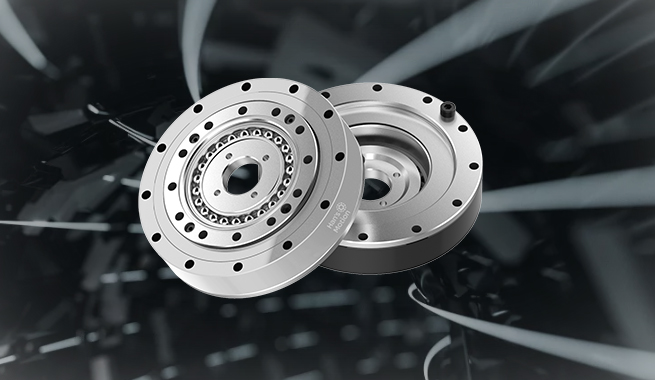
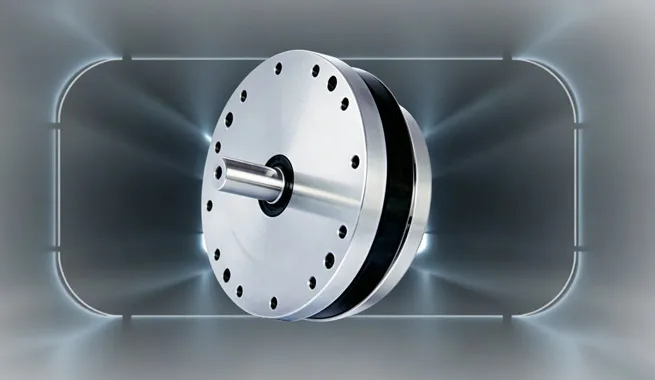
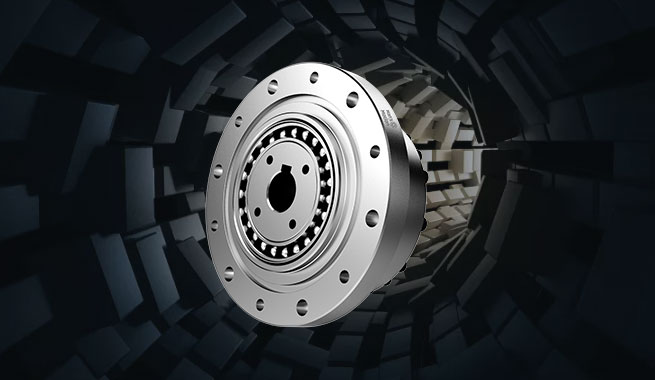
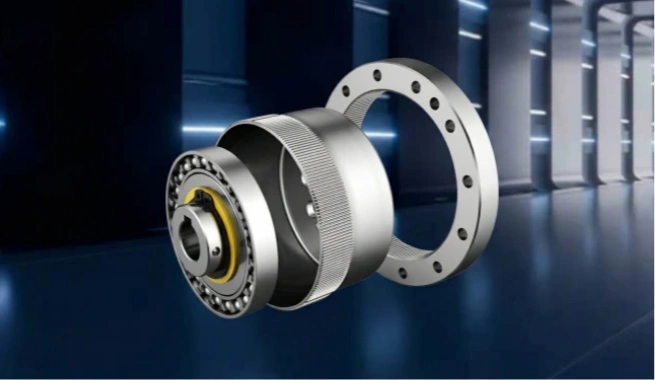
Why have harmonic drives become the industry standard for legged robotics? The answer lies in their unique operating principle, which utilizes a flexible spline to transmit power. This design offers several unparalleled advantages:
Zero Backlash: Absolute positional accuracy is non-negotiable for robotic kinematics. Strain wave gearing inherently operates with zero backlash, ensuring the robot's foot lands exactly where the algorithm intends, every single time.
Exceptional Torque Density: Space is severely limited inside a robotic joint. Harmonic drives provide incredibly high reduction ratios (ranging from 30:1 to 160:1 and beyond) in a single stage. This high torque-to-weight ratio allows engineers to design slimmer legs, reducing the robot's overall inertia and significantly extending battery life.
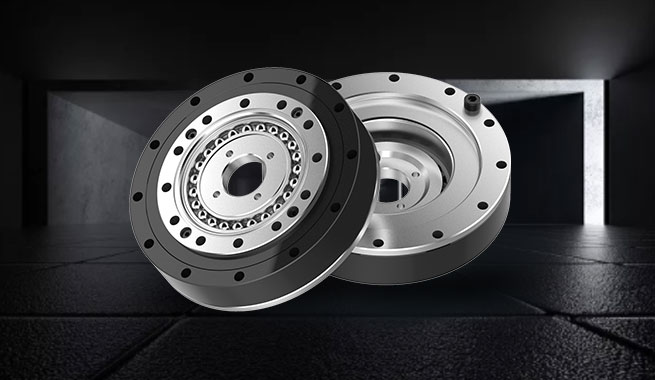
Hollow Shaft Designs: Many premium harmonic reducers feature a hollow shaft, allowing engineers to route power cables, sensors, and communication wires directly through the center of the joint. This simplifies the mechanical assembly and protects vulnerable wiring from environmental hazards.
While the engineering specifications are crucial, manufacturing scale and supply chain stability are equally important for robotics companies moving from prototyping to mass production.
Historically, the market has been dominated by a few major players. However, as the robotics industry scales, procurement directors are actively seeking a reliable Leaderdrive alternative for robotics to mitigate supply chain risks, reduce lead times, and optimize costs without sacrificing a fraction of a degree in precision.
When evaluating a harmonic drive partner, look for manufacturers who offer:
1. Customization Capabilities: The ability to tweak integration flanges, lubrication types, and sealing options for harsh environmental deployments.
2. Rigorous Quality Control: Documented testing for torsional stiffness, hysteresis loss, and life-cycle durability.
3. Engineering Support: Direct access to mechanical engineers who understand the unique dynamics of quadruped locomotion.
At Picea Motion Drive, we specialize in engineering high-performance harmonic reducers designed specifically for the rigorous demands of modern robotics. Our components deliver the zero-backlash precision and high-torque density your algorithms require, backed by a responsive manufacturing infrastructure.
Don't let subpar gearing limit your robot's agility or delay your production schedule. Whether you are optimizing a current quadruped model or building a new robotic platform from the ground up, the right harmonic drive is your competitive advantage.
Contact the engineering team at Picea Motion Drive today to request technical specifications, download 3D CAD models, or discuss a custom actuator solution tailored to your exact joint design requirements.
Contact us today to discuss your project requirements and find the perfect harmonic drive solutions.
Contact Us Now
Hi, I am Sophie from Shenzhen PICEA Motion Technology Co, Ltd. I have been working in overseas business trade for more than 5 years. PICEA Motion is a professional manufacturer of precision harmonic gears. Our company integrates R&D, production, sales, and after-sales services.