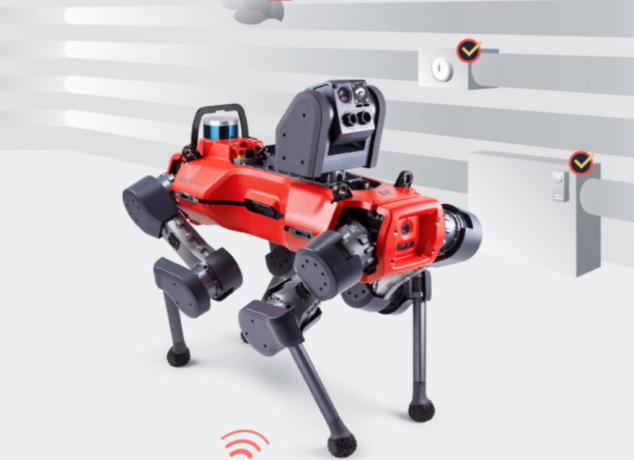
From industrial inspection to hazardous environment exploration, quadruped robots are rapidly becoming one of the most practical robotic platforms in the real world. Companies like ANYbotics have demonstrated how four-legged robots can navigate stairs, uneven terrain, and confined industrial spaces with remarkable stability.
But behind this mobility lies a critical engineering challenge: joint actuation.
Each leg of a quadruped robot must deliver precise, high-torque motion while remaining lightweight and durable enough to withstand continuous impact. Choosing the wrong gear system can lead to poor control, reduced efficiency, or even mechanical failure.
This is where harmonic drives (zero backlash gear reducers) play a decisive role.
Designing actuators for quadruped robots is fundamentally different from traditional industrial automation. The requirements are more dynamic, more complex, and far less forgiving.
Every leg joint—hip, knee, and ankle—must generate sufficient torque to:
Support the robot's full body weight
Handle dynamic loads during walking, trotting, or jumping
Maintain stability on uneven terrain
At the same time, adding excessive weight to each joint reduces agility and increases energy consumption.
This creates a strict requirement: maximum torque output within minimum size and weight.
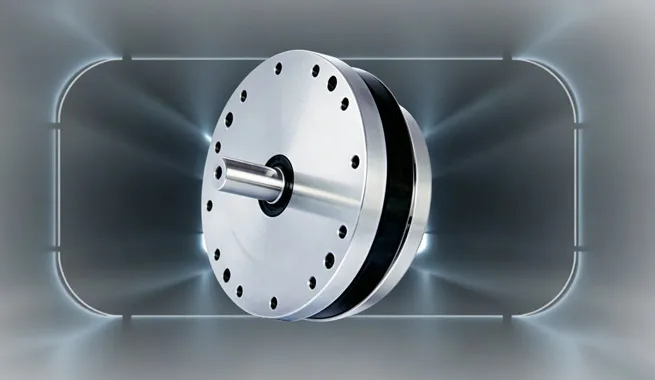
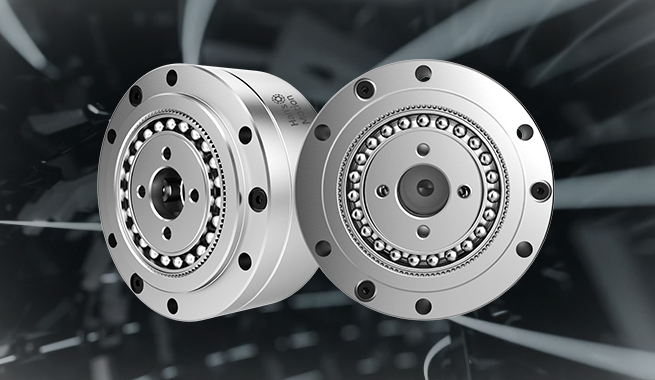
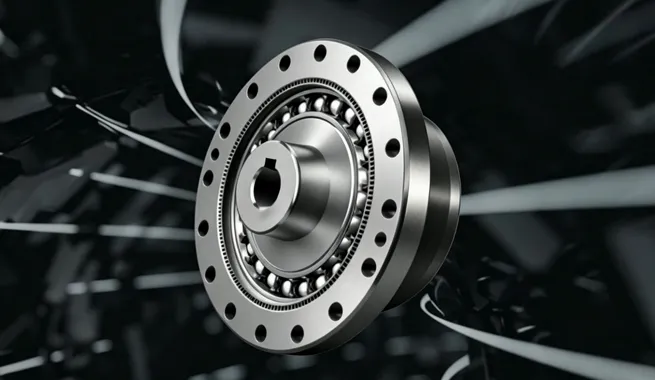
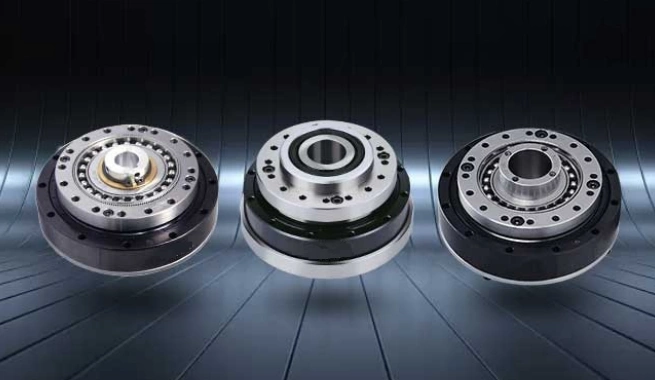
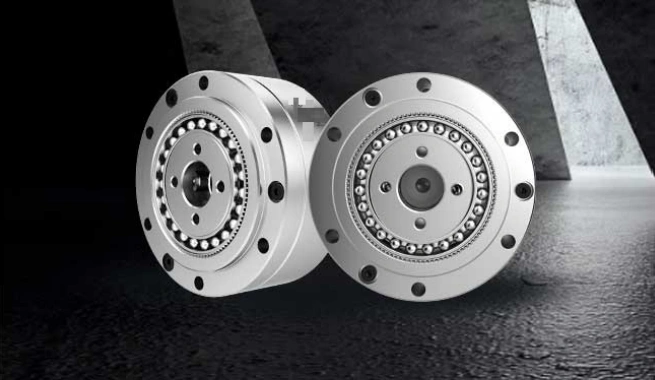
Harmonic drives excel in this area by delivering high reduction ratios in a compact, lightweight structure, making them ideal for robotic joint actuators in legged systems.
Quadruped robots rely on continuous real-time motion control. Even small positioning errors can destabilize gait patterns or reduce traction.
Traditional gear systems often introduce backlash—small gaps between gear teeth—which leads to:
Delayed response in motion control
Reduced positioning accuracy
Instability during dynamic movement
In contrast, harmonic drives provide near-zero backlash, ensuring that:
Motion commands are executed instantly
Joint trajectories remain accurate
The robot maintains balance during complex maneuvers
For applications like industrial inspection or autonomous navigation, this level of precision is not optional—it is essential.
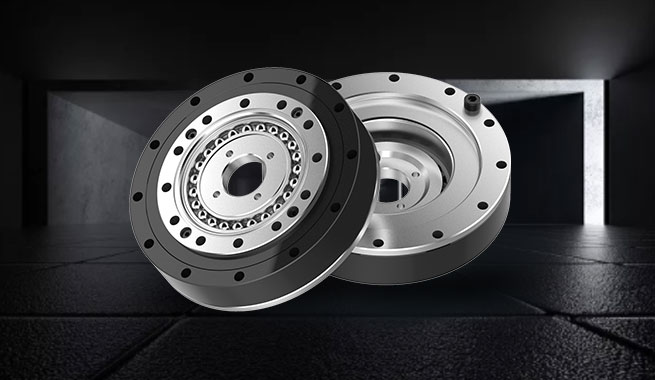
To understand why harmonic drives perform so well in quadruped robots, it is important to look at their internal structure.
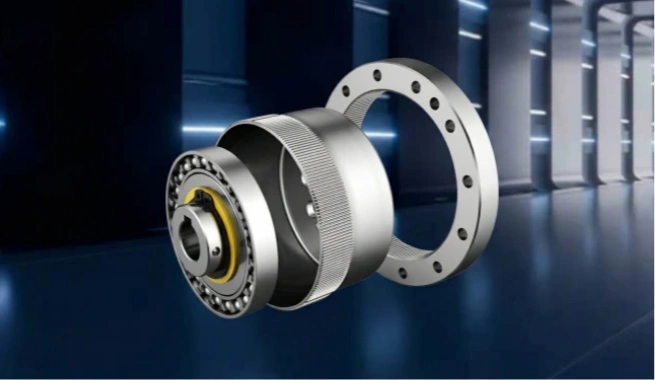
A typical harmonic drive consists of three core components:
Wave Generator (elliptical input component)
Flexspline (flexible thin-walled gear)
Circular Spline (rigid outer gear)
When the wave generator rotates, it deforms the flexspline into an elliptical shape, causing it to engage with the circular spline at two opposing regions. This unique mechanism creates:
High reduction ratios in a single stage
Continuous tooth engagement
Smooth and precise motion transmission
During walking or running, robotic legs experience cyclic loads and impact forces. Harmonic drives distribute stress across multiple teeth simultaneously, which helps:
Improve load distribution
Reduce localized wear
Maintain accuracy under dynamic conditions
Additionally, the compact design allows engineers to integrate the actuator directly into the joint, reducing overall system complexity.
While planetary gearboxes are widely used in industrial systems, they present several limitations when applied to legged robots.
Multiple gear stages increase size and weight
Backlash is difficult to eliminate completely
Lower precision under dynamic load conditions
Less suitable for compact joint integration
At Picea Motion Drive, our harmonic drive solutions are engineered specifically for robotic applications, including both humanoid and quadruped platforms.
Key advantages include:
Zero backlash design for precise motion control
High torque density in compact form factors
Lightweight construction for improved robot efficiency
Optimized durability for cyclic and impact loads
Flexible integration into robotic joint architectures
Compared to traditional solutions, harmonic drives enable more agile, stable, and reliable quadruped robots, especially in demanding environments such as industrial inspection or outdoor terrain.
As quadruped robots continue to expand into real-world applications, the importance of high-performance joint actuators becomes increasingly clear.
From maintaining balance on uneven ground to executing precise dynamic movements, the performance of a four-legged robot depends heavily on its gear system.
Harmonic drives are not just an option—they are a foundational technology for modern legged robotics.
Are you developing the next generation of quadruped robots?
At Picea Motion Drive, we provide custom harmonic drive solutions tailored to your specific joint requirements—whether you are optimizing for torque, precision, or compact integration.
Contact our engineering team today to discuss your project and find the right actuator solution for your robotic platform.
Contact us today to discuss your project requirements and find the perfect harmonic drive solutions.
Contact Us Now
Hi, I am Sophie from Shenzhen PICEA Motion Technology Co, Ltd. I have been working in overseas business trade for more than 5 years. PICEA Motion is a professional manufacturer of precision harmonic gears. Our company integrates R&D, production, sales, and after-sales services.