Modern humanoid robots are marvels of engineering, often boasting over 28 degrees of freedom (DOF) to replicate the fluid movements of the human body. However, as the demand for human-like dexterity increases, so does the complexity of the internal hardware. With the addition of high-torque motors, high-resolution encoders, and advanced vision and force/torque sensors, engineers are facing a critical mechanical bottleneck: the "cable spaghetti" problem.
When dozens of power cables and communication wires are routed externally around highly active joints, it creates a literal design nightmare. Exposed cables are prone to snagging, motion interference, and severe wear and tear from continuous bending. Solving this robot joint cable routing challenge has become a top priority for system architects.
The solution? The widespread adoption of hollow shaft designs and integrated joint modules.
In the early days of robotics, actuators and their wiring were often bulky and appended to the outside of the robotic frame. Today, the most advanced humanoid models—such as Tesla Optimus and Figure AI—demand a sleek, human-like form factor with zero exposed wires.
This requirement has accelerated a major trend in strain wave gearings in robotics: the shift toward integrated robotic joint modules. By combining a frameless torque motor, a precision harmonic gearbox, a high-resolution encoder, and a motor controller into a single, cohesive unit, engineers save valuable space and weight.
However, simply packing these components together doesn't solve the wiring issue. If the cables connecting the lower body to the arms and head still have to bypass the outside of the shoulder or waist joints, the risk of cable fatigue remains high. This is why the integration must be paired with a hollow shaft design.
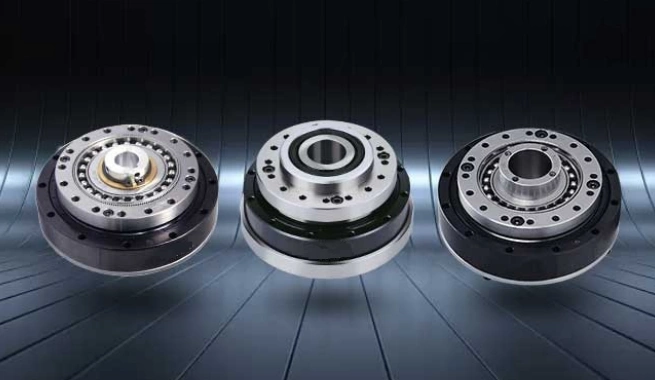
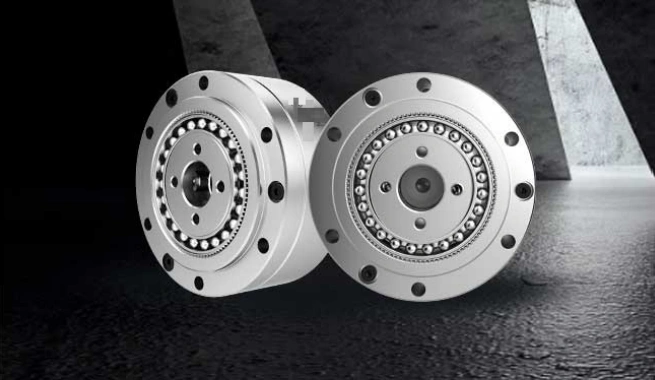
A hollow shaft strain wave gearing is an engineering masterpiece that fundamentally changes how a robot is wired. Instead of routing thick bundles of power lines and EtherCAT/CAN communication buses around the joint, a hollow bore through the exact center of rotation allows the cables to pass directly through the axis.
This configuration offers profound mechanical advantages:
● Minimized Cable Stress: When cables pass through the center of rotation, they experience twisting (torsion) rather than bending. Cables are inherently much better at surviving millions of twisting cycles than they are at surviving repetitive bending, drastically increasing the lifespan of the robot's nervous system.
● Infinite or High-Angle Rotation: Without external cables limiting the range of motion, joints can achieve much wider rotation angles. In some configurations, it even allows for infinite 360-degree continuous rotation.
● Sleek, Protected Aesthetics: Internal routing protects sensitive communication buses from environmental hazards, impacts, and snagging, enabling the clean, sci-fi aesthetic expected of modern humanoids and collaborative robots (cobots).
Ultimately, hollow shaft technology allows engineers to build incredibly compact robotic actuators without compromising on power, precision, or reliability.
At Picea Motion Drive, we understand that designing a highly dexterous, cable-free robotic limb requires uncompromising mechanical components. If you are a mechanical engineer struggling to route cables through heavy-duty joints without sacrificing torque or precision, our PMHG Series is the definitive answer.
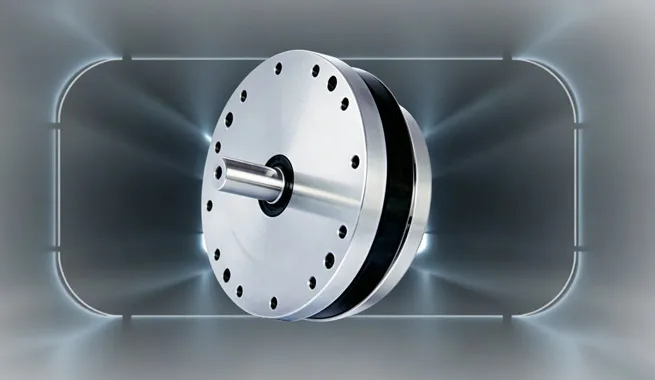
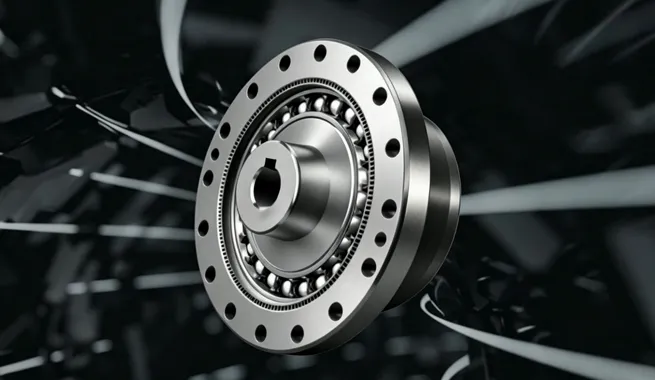
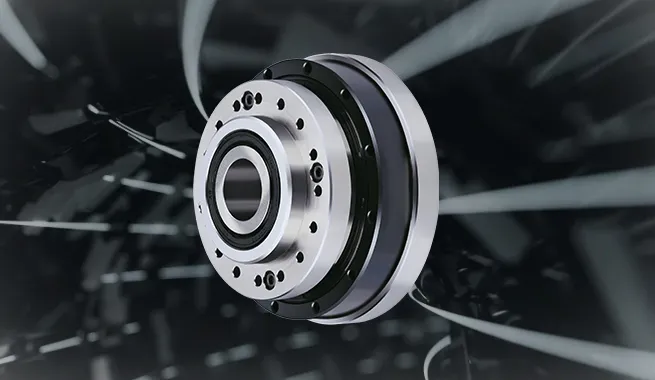
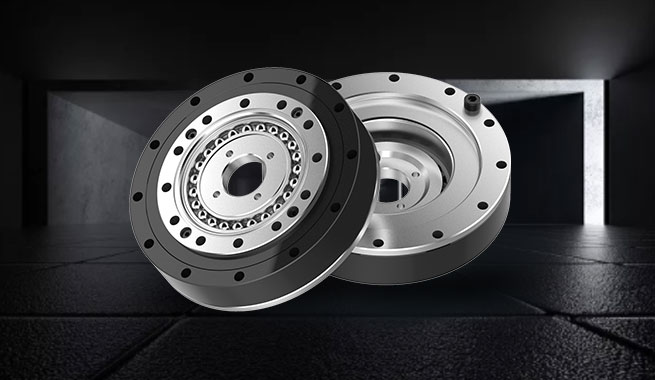
The PMHG Series Hat-Type Strain wave gearing is purpose-built for advanced robotic joint integration.
● Large Bore Hollow Structure: The PMHG series features a generously sized hollow shaft that easily accommodates complex cable bundles, laser paths, or even passing shafts, completely eliminating external cable routing nightmares.
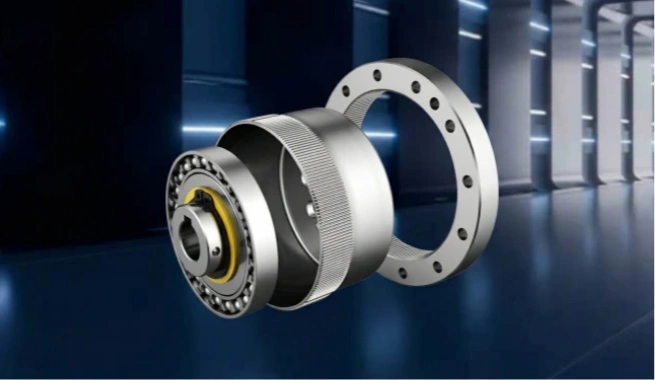
● High Torque & Zero Backlash: Despite its hollow center, the PMHG series utilizes an optimized hat-type flexspline and a rigid cross roller bearing to maintain the extraordinary torque density and absolute zero backlash expected of top-tier strain wave gearings.
● Perfect for Core Joints: Thanks to its robust load-bearing capabilities and central wiring path, the PMHG series is the optimal choice for the most critical bottlenecks in a humanoid robot—specifically the waist (torso) and shoulder joints, where the largest volume of power and data lines must pass through to reach the arms and head.
The future of humanoid robotics is not just about writing better AI algorithms; it is about solving fundamental mechanical challenges. Efficient, safe, and reliable robot joint cable routing is what allows a robot to operate in the real world for years without maintenance.
By integrating a hollow shaft strain wave gearing into your actuator modules, you can eliminate cable wear, reduce joint volume, and achieve the clean, human-like motion your project demands.
Ready to streamline your robotic joint design? Contact the engineering team at Picea Motion Drive today to learn how our PMHG Series can solve your actuator packaging challenges.
Contact us today to discuss your project requirements and find the perfect harmonic drive solutions.
Contact Us Now
Hi, I am Sophie from Shenzhen PICEA Motion Technology Co, Ltd. I have been working in overseas business trade for more than 5 years. PICEA Motion is a professional manufacturer of precision harmonic gears. Our company integrates R&D, production, sales, and after-sales services.