2026 is being called the year of embodied intelligence, and the narrative has shifted dramatically in the past twelve months. A robot that can walk, balance, and navigate is no longer enough to impress anyone. The real prize — and the real engineering challenge — is manipulation: the ability to grasp, orient, and finely position objects the way a human hand does.
That shift puts a new component in the spotlight. Not the large hip or shoulder actuators that make headlines, but the tiny reducers that drive wrists, fingers, and end effectors. For engineers building dexterous hands, adaptive grippers, and high-precision manipulators, the choice of these micro reducers is now one of the most consequential decisions in the entire robot design.
For years, the robotics industry focused on locomotion. Quadruped and humanoid platforms demonstrated impressive walking, climbing, and obstacle avoidance. But embodied AI is only economically valuable when a robot can actually do useful work with its hands — assembling a part, sorting an object, tightening a screw, or handing a tool to a worker.
This is why dexterous manipulation has become the hottest topic in robotics. A human hand has more than 20 degrees of freedom packed into a space the size of a coffee cup. Replicating that capability forces engineers to solve a problem that is as much mechanical as it is algorithmic.
Finger and wrist joints impose requirements that are far more unforgiving than those of larger joints:
Zero backlash — force control and impedance control demand that the joint respond instantly and predictably to torque commands. Any play in the gear train translates directly into unstable grasping and dropped objects.
Micro footprint — a finger joint is often a 17 mm-class package or smaller. Every millimeter of diameter matters when you are packing twenty actuators into a single hand.
Ultra-low weight — the farther a component sits from the base of the arm, the more its mass multiplies inertia. Heavy fingers make the whole arm sluggish and drain battery.
High single-stage ratio — there is no room for a multi-stage gearbox in a fingertip. The reducer must deliver the full reduction in one compact stage.
A conventional planetary or spur gearbox simply cannot satisfy all of these at once. This is precisely the territory where strain wave gearing — the harmonic drive — excels.
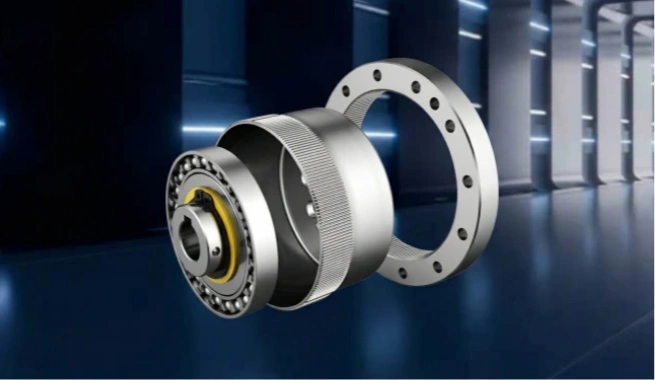
A harmonic drive generates its reduction through the elastic deformation of a thin-walled flexspline, which engages a rigid circular spline at two opposing points of a rotating elliptical wave generator. That mechanism delivers three properties that are decisive for manipulation:
Near-zero backlash, because dozens of teeth are engaged simultaneously and the meshing is continuous rather than intermittent.
Very high reduction ratios (30:1 to 160:1 and beyond) in a single, compact stage, eliminating the size and weight of stacked gear trains.
High torque density with smooth, low-vibration motion, which is essential for holding a delicate object without crushing it.
Equally important for hand design, many harmonic drives are available with hollow or component-style construction, so tendons, sensor wires, and cables can route cleanly through the joint center.
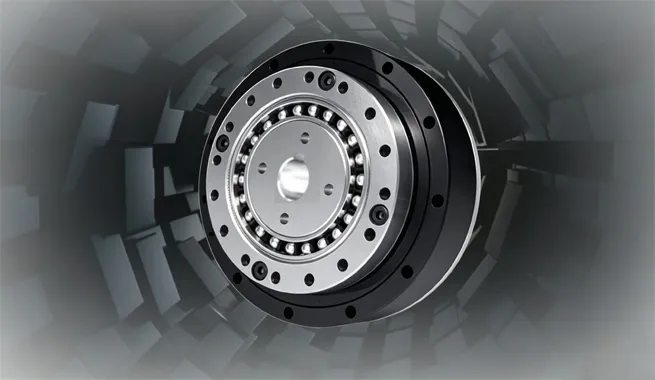
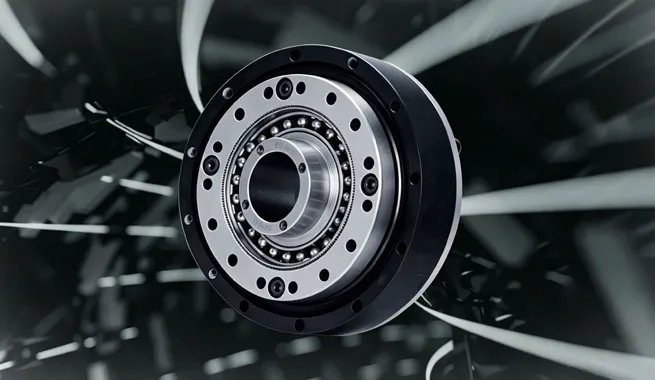
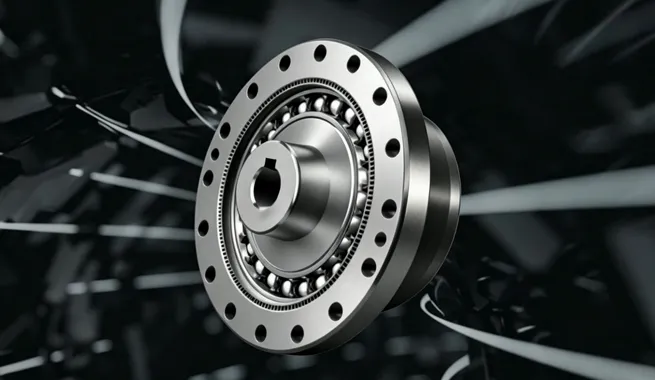
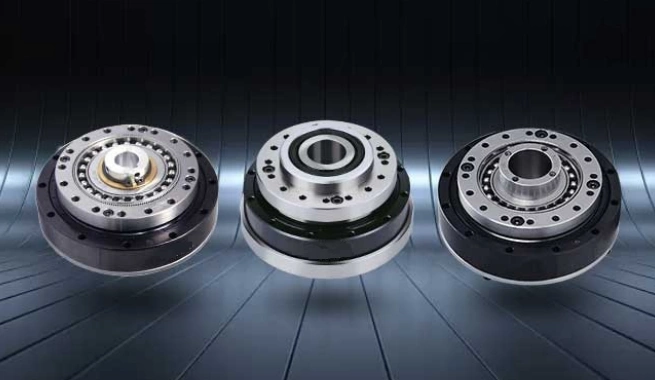
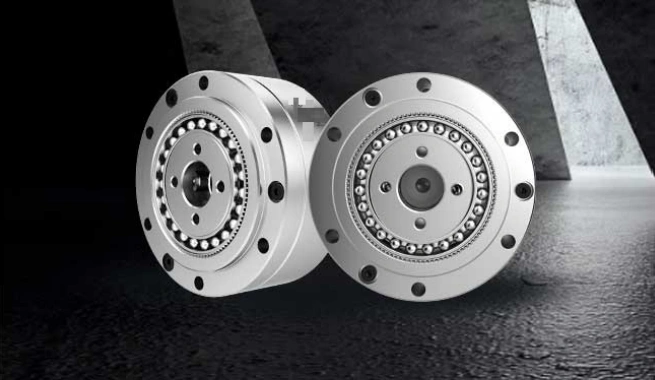
Recognizing that the manipulation era demands a different class of reducer, Picea Motion has developed the SL (Super-Lightweight) series specifically for the compact, mass-sensitive joints of humanoid robots — and nowhere is that more relevant than in the hand and wrist.
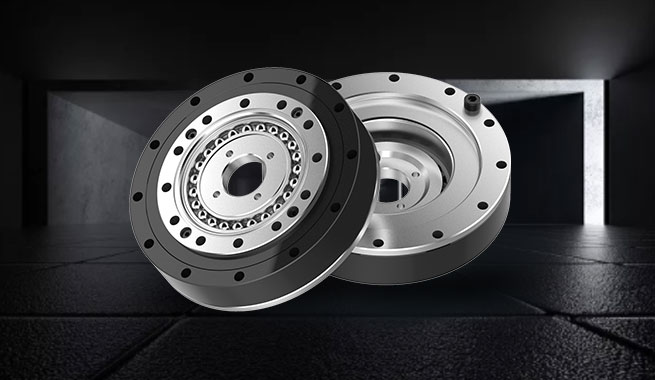
At the extreme end of the lineup is the PMCD-II-SL4, an ultra-flat component-type harmonic drive that shrinks the outer diameter by roughly 22.5% compared with conventional hat-type designs. In the 17 mm size class it weighs only about 20 grams while still delivering tens of Newton-meters of momentary peak torque — making it a natural fit for finger, wrist, and compact end-effector joints where every gram and every millimeter count.
For applications that need a balance of torque and size, the PMCM-II-SL3 uses an innovative medium-cup flexspline to strike the optimal trade-off between axial length and torque output. And for designers who want to minimize assembly steps, the PMCG-II-SL2 integrates the circular spline directly with the crossed-roller bearing inner ring, so the reducer arrives ready to mount.
Across the SL series, transmission error is held to 90 arc-seconds or better and backlash to the 10–20 arc-second range — the level of mechanical purity that force-controlled grasping depends on.
The same properties that make micro harmonic drives ideal for robotic hands make them indispensable across precision manipulation, including adaptive grippers in smart factories, wrist joints in surgical and rehabilitation robots, semiconductor wafer and component handling, and stabilized camera or LiDAR gimbals on inspection robots. In every case, the requirement is identical: precise, smooth, zero-backlash motion in the smallest possible package.
As embodied AI pushes robots from walking to working, the dexterous hand has become the industry's proving ground. The algorithms are maturing rapidly — but they are only as good as the mechanics that execute them. For finger and wrist joints, the micro harmonic drive has become the enabling technology that turns a grasp algorithm into a reliable, repeatable physical action.
For teams building the next generation of manipulators, the message is simple: choose the wrist and finger reducers as carefully as you choose the perception stack. The quality of the grasp depends on it.
Picea Motion provides micro, super-lightweight harmonic drives engineered for wrist, finger, and end-effector joints — with zero-backlash precision and the compact form factors your manipulator design requires. Contact our engineering team to request specifications, CAD models, or a custom solution for your dexterous manipulation platform.
Contact us today to discuss your project requirements and find the perfect harmonic drive solutions.
Contact Us Now
Hi, I am Sophie from Shenzhen PICEA Motion Technology Co, Ltd. I have been working in overseas business trade for more than 5 years. PICEA Motion is a professional manufacturer of precision harmonic gears. Our company integrates R&D, production, sales, and after-sales services.