The commercialization of humanoid robots is transitioning from isolated laboratory environments to scalable industrial applications. As development accelerates across manufacturing, logistics, and healthcare sectors, the underlying hardware is undergoing a rapid evolution.
At the center of this shift is the humanoid-specific gear reducer market—a sector experiencing unprecedented demand. For robotics engineers and system architects, understanding the trajectory of this market and the latest mechanical design trends is essential for developing next-generation platforms.
The push toward commercialization is driving substantial growth in specialized robotic components. Based on recent industry analyses for the 2025–2026 landscape, the market for humanoid-specific gear reducers is expanding at a remarkable pace.
Rapid Market Expansion: The specialized gear reducer market for humanoid applications is projected to scale from approximately $50 million in 2025 toward hundreds of millions by the early 2030s.
High CAGR: Driven by the aggressive deployment targets of leading humanoid developers, this specific niche is experiencing compound annual growth rates (CAGR) estimated at over 40%. As highlighted by global automation deployment trends tracked by the International Federation of Robotics (IFR), the shift toward complex, multi-axis robots is a primary driver for advanced component demand.
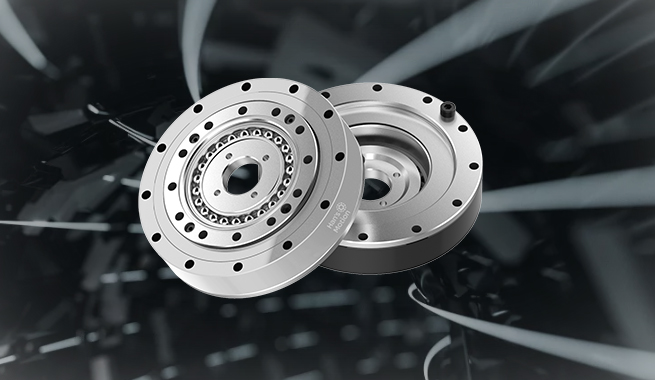
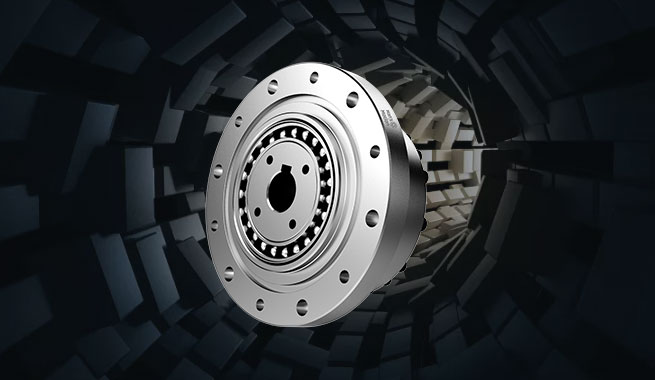
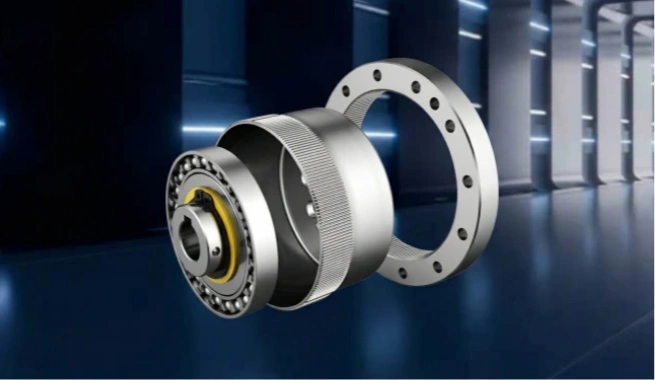
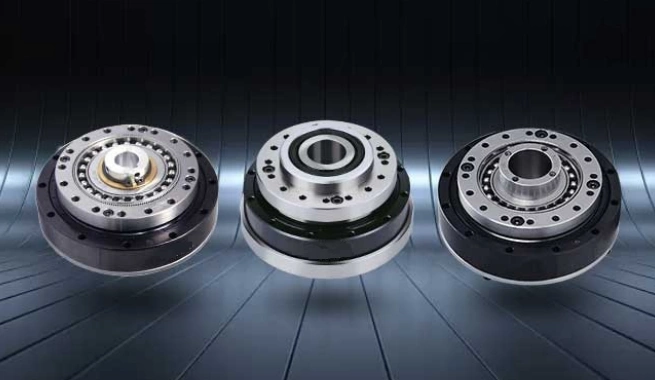
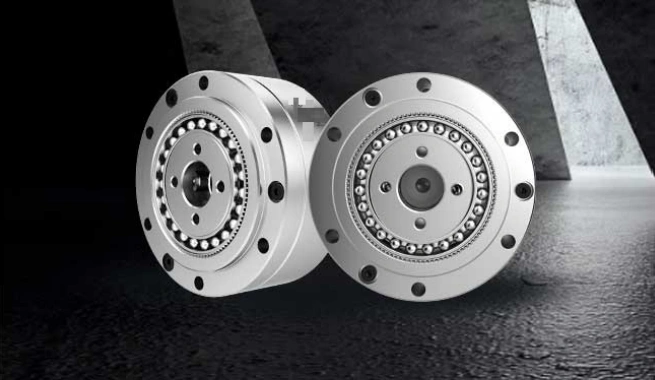
Strain wave reducer Dominance: Within this growing sector, harmonic gearboxs account for an estimated 60% to 70% market share. Their inherent characteristics—specifically high single-stage reduction ratios and near-zero backlash—make them the preferred solution for the high-precision requirements of upper-body robotic joints.
This focused demand is simultaneously fueling broader growth across the entire strain wave reducer market, solidifying strain wave gearing as a foundational technology in modern robotics.
To meet the strict weight, space, and safety requirements of untethered bipedal robots, component design is shifting significantly. Recent developments point to four distinct engineering trends designed to solve the challenges of humanoid motion:
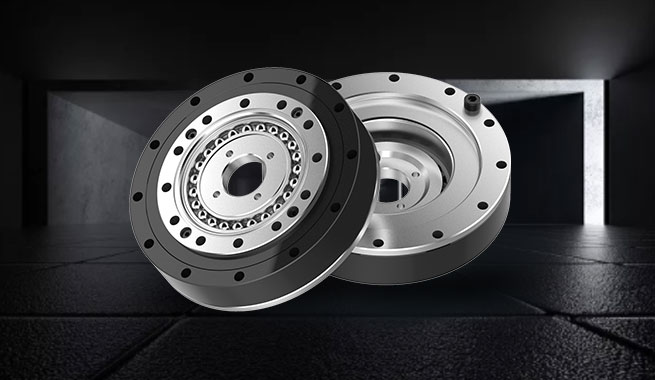
Untethered robots are highly constrained by battery life and inertia. Every gram added to a distal joint (like a wrist) exponentially increases the torque required at the proximal joints (like a shoulder). Engineers are moving toward super-flat and ultra-lightweight strain wave reducer profiles that maximize torque density while minimizing the axial footprint, enabling slimmer and more energy-efficient limb designs.
Safe human-robot interaction requires mechanical compliance. The industry is moving away from purely rigid actuation toward force-position closed-loop modules. Research published in the IEEE Robotics and Automation Magazine emphasizes that achieving necessary mechanical compliance in collaborative and humanoid environments relies heavily on combining advanced torque sensing directly with low-backlash transmission systems. This allows control systems to precisely manage interaction forces, enabling robots to absorb impacts safely.
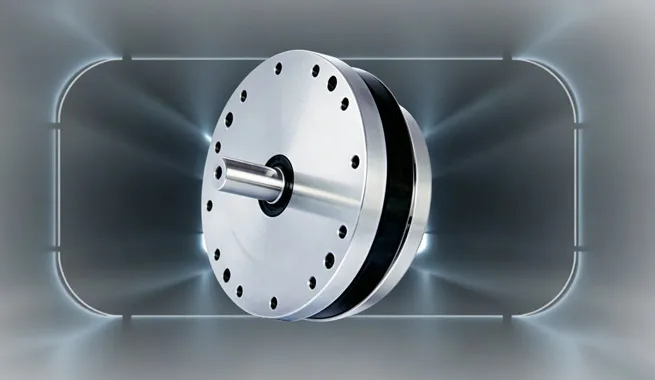
Traditional joint assembly—sourcing separate frameless motors, gearheads, and sensors—is becoming a bottleneck for scalable manufacturing. The current trend strongly favors fully integrated actuators. These modular, "plug-and-play" units house the motor, strain wave reducer, and electronics within a single compact structure, often utilizing a hollow-shaft design to resolve complex internal cable routing issues.
Absolute precision is critical for stability. Modern humanoid joint architectures increasingly rely on dual-encoder setups. By positioning one high-resolution encoder before the reducer (on the motor shaft) and another post-reducer, the system can continuously monitor and correct micro-deflections in real-time, ensuring reliable motion control in unpredictable environments.
As the humanoid market scales into the hundreds of millions, the ability to source reliable, high-precision motion components will define the success of many robotics projects. The focus is no longer just on procuring a gear, but on finding mechanical solutions that address the specific challenges of weight, integration, and control.
At Picea Motion Drive, we closely track these engineering shifts to align our manufacturing capabilities with the needs of modern robotics. Our focus remains on developing high-precision, zero-backlash strain wave reducers—including hollow-shaft and ultra-flat topologies—that support the industry's move toward lighter, safer, and more integrated humanoid joints.
Exploring solutions for your next robotic prototype? Reach out to the Picea Motion Drive engineering team to discuss technical specifications, request 3D CAD models, or evaluate how our strain wave reducer technologies can integrate into your joint architecture.
Contact us today to discuss your project requirements and find the perfect harmonic drive solutions.
Contact Us Now
Hi, I am Sophie from Shenzhen PICEA Motion Technology Co, Ltd. I have been working in overseas business trade for more than 5 years. PICEA Motion is a professional manufacturer of precision harmonic gears. Our company integrates R&D, production, sales, and after-sales services.